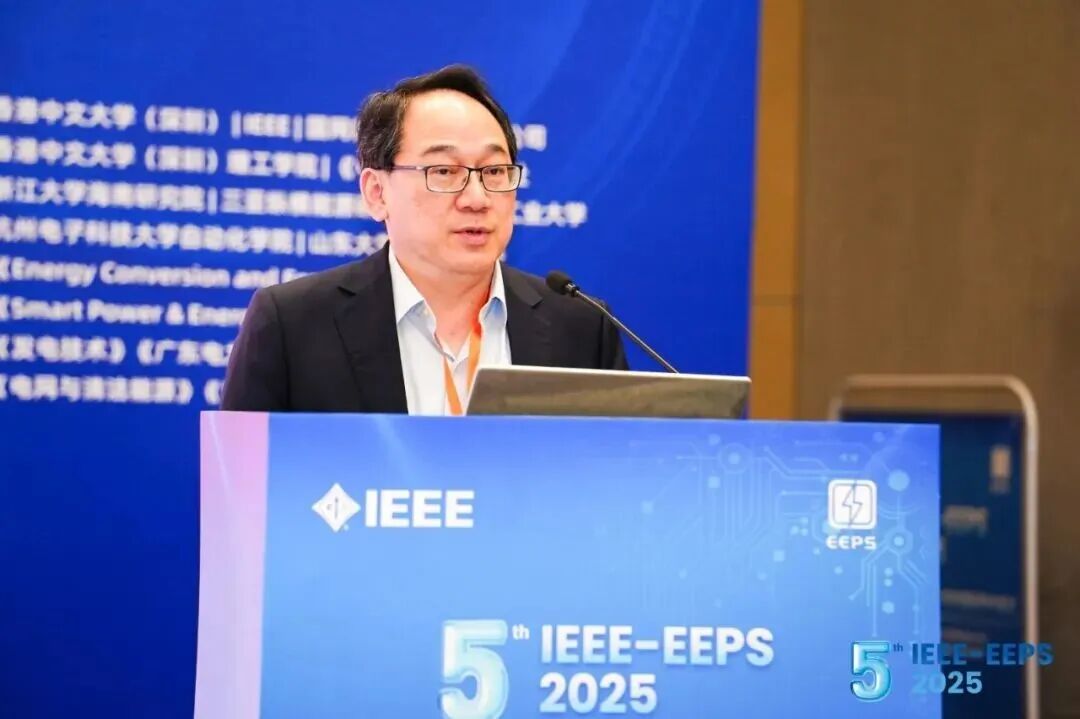
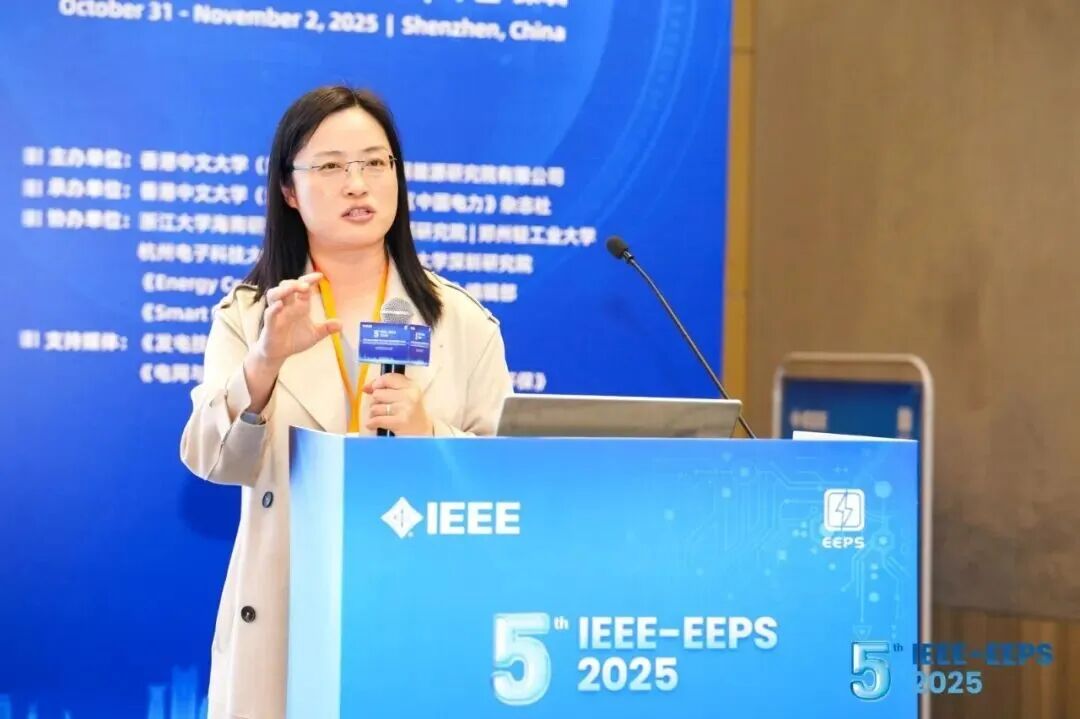
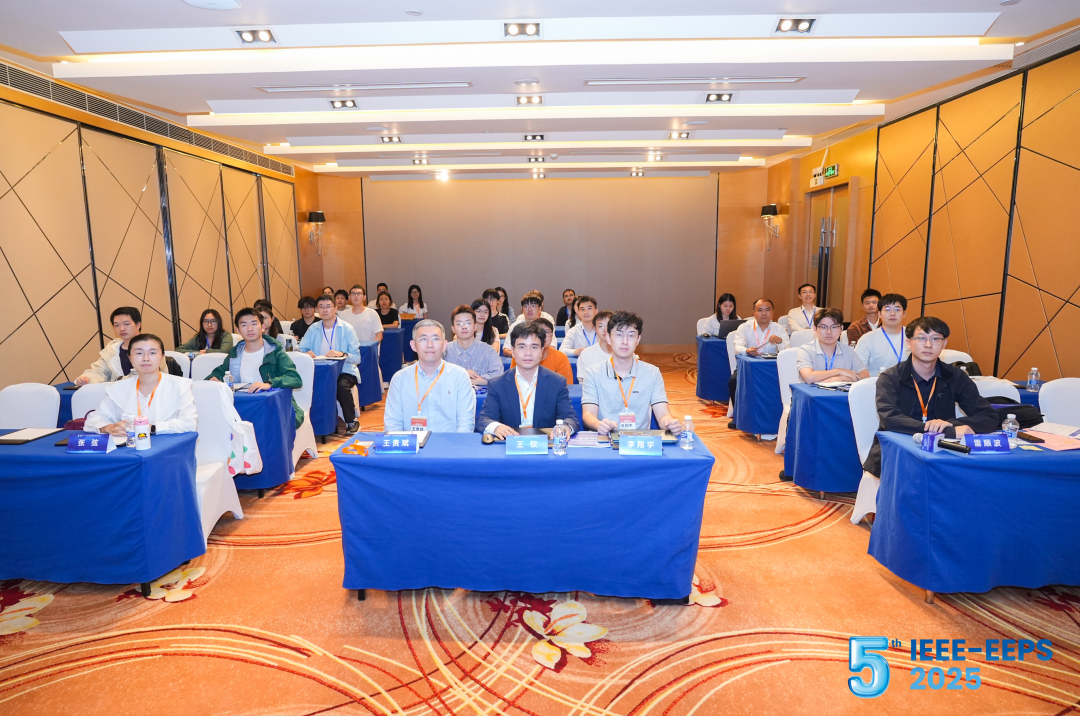
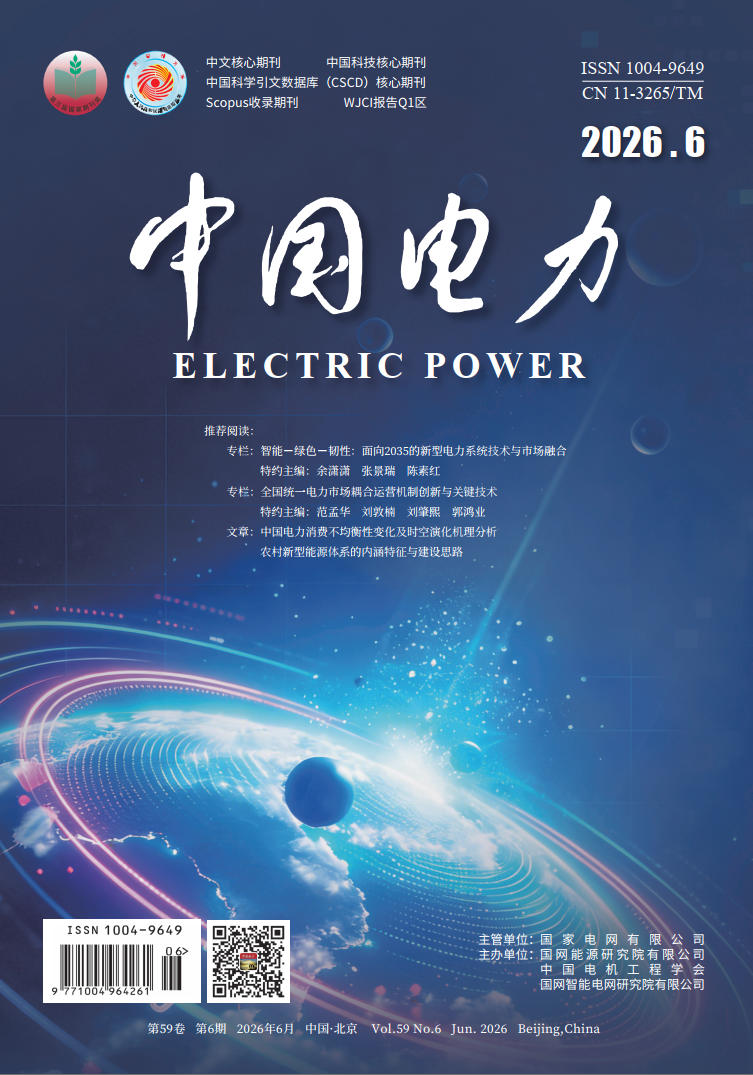
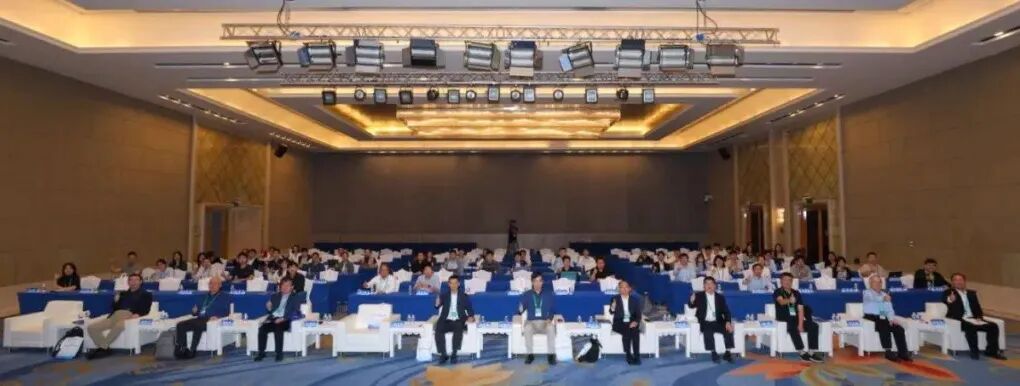
October 31st - November 2nd, 2025, the Autumn Academic Annual Meeting of China Electric Power & 5th IEEE International Academic Conference on Energy Engineering and Power Systems (IEEE-EEPS 2025) was successfully held in Shenzhen. The conference brought together experts from around the world in the fields of energy and power systems, delving into in-depth discussions around the theme of "Digital Intelligence Empowerment; Multi-Energy Integration Forging a New Paradigm of the Ecology of the New Power System". The meeting was jointly organized by State Grid Energy Research Institute Co., Ltd. and The Chinese of Hong Kong (Shenzhen); hosted by the Editorial Department of China Electric Power and the School of Engineering of The Chinese University of Hong Kong (Shenzhen co-organized by China Electric Power Society's Energy and Power Journal Cluster, Zhejiang University Hainan Research Institute, Sanya Zongheng Energy Research Institute, Beijing of Technology Energy Storage Science and Engineering College, Zhengzhou University of Light Industry, Hangzhou Dianzi University School of Automation, Shandong University Shenzhen Research; and supported by the journals of "Power Generation Technology", "Guangdong Electric Power", "Shandong Electric Power Technology", "Power Grid and Clean Energy, "Smart Power", "Electric Power Technology and Environmental Protection". Over a hundred guests from universities, research institutions, and power enterprises across the country participated in the event On November 1st, 2025, the Autumn Academic Annual Meeting of China Electric Power was divided into keynote reports, three parallel sub-forums, the commendation outstanding papers at the academic annual meeting, and the release of a special topic call for papers.
Annual Meeting Speech
Deputy Director of State Grid Energy Institute, Editor-in-Chief of China Electric Power Journal Shan Baoguo, and Associate Vice President of The Chinese of Hong Kong (Shenzhen) Huang Jianwei attended the meeting and delivered speeches
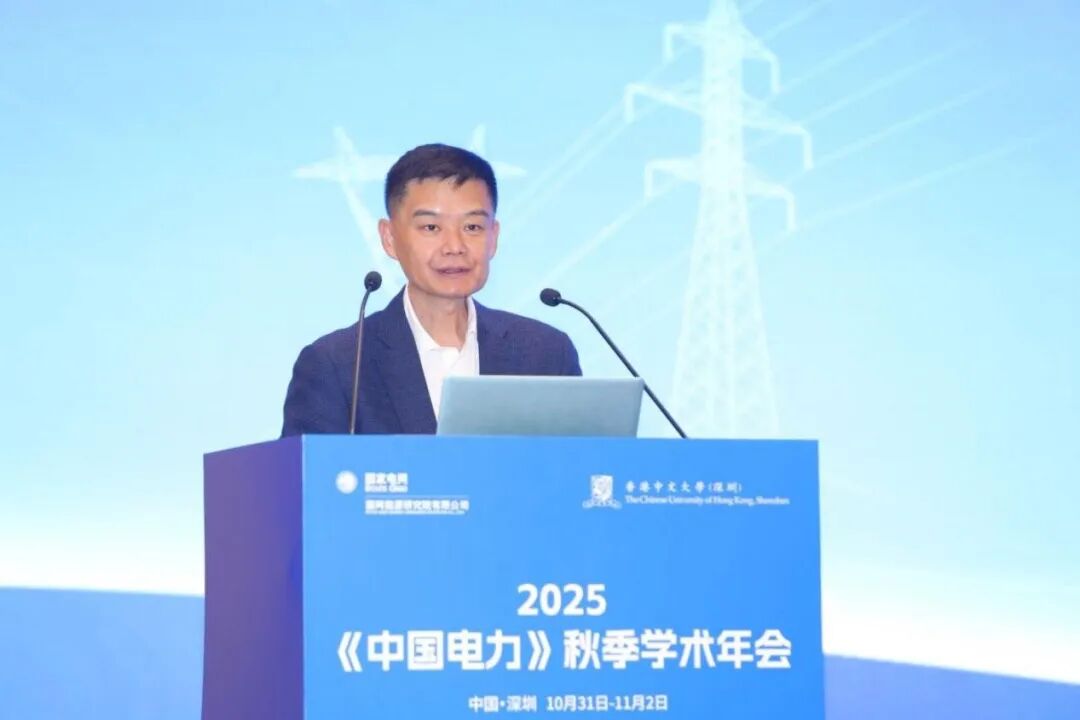
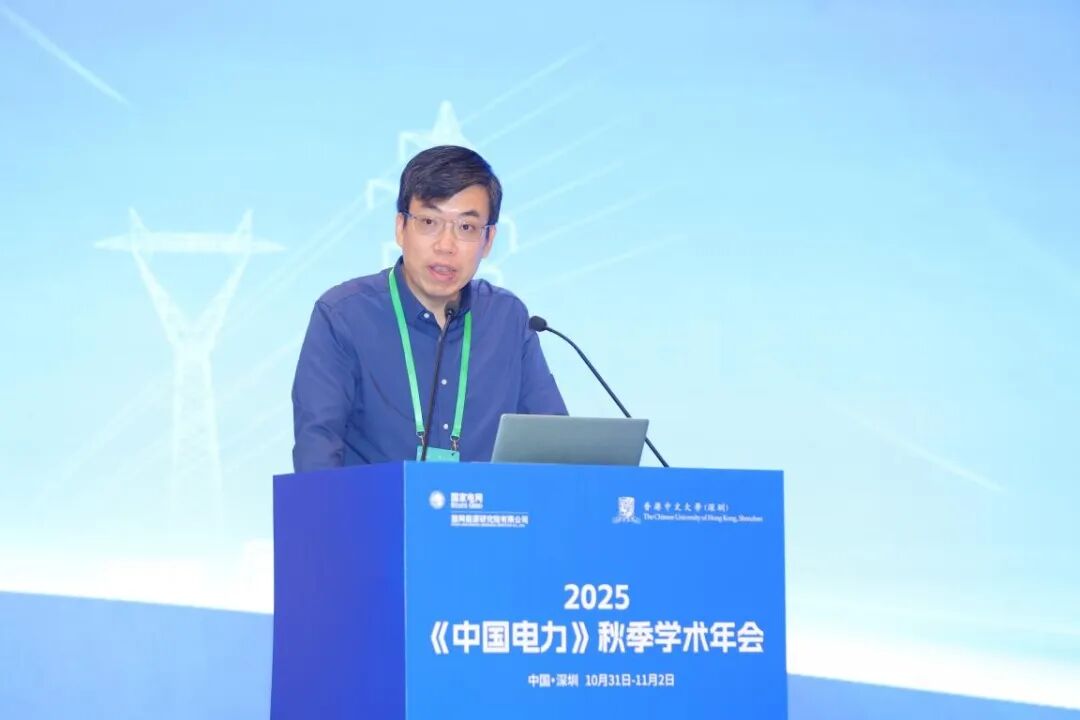
Speech by Deputy Director of State Grid Energy Institute, Editor-in-Chief of China Electric Power, Shan Baoguo
Bao Guo said that the Fourth Plenary Session of the 20th CPC Central Committee has made a series of important arrangements to the construction of a new type of energy system, actively and steadily promote carbon peaking and carbon neutrality, and promote green production and lifestyle. The 15th Five-Year period will be a strategic key period to achieve the goal of carbon peaking and build a new power system. The challenges have never been seen before, and the opportunities have never been before. This requires us to strengthen forward-looking research and systematic layout in terms of basic theoretical innovation, frontier technology foresight, planning method breakthrough, and market mechanism design. As of the earliest comprehensive journals of the power industry founded in New China, China Electric Power is willing to join hands with all experts, authors, and readers to build a communication platform academic highland to support scientific and technological innovation, guide more papers to be written on the frontier practice of building a new power system, and contribute wisdom and strength to accelerating the construction a powerful country in science and technology and a powerful country in energy.
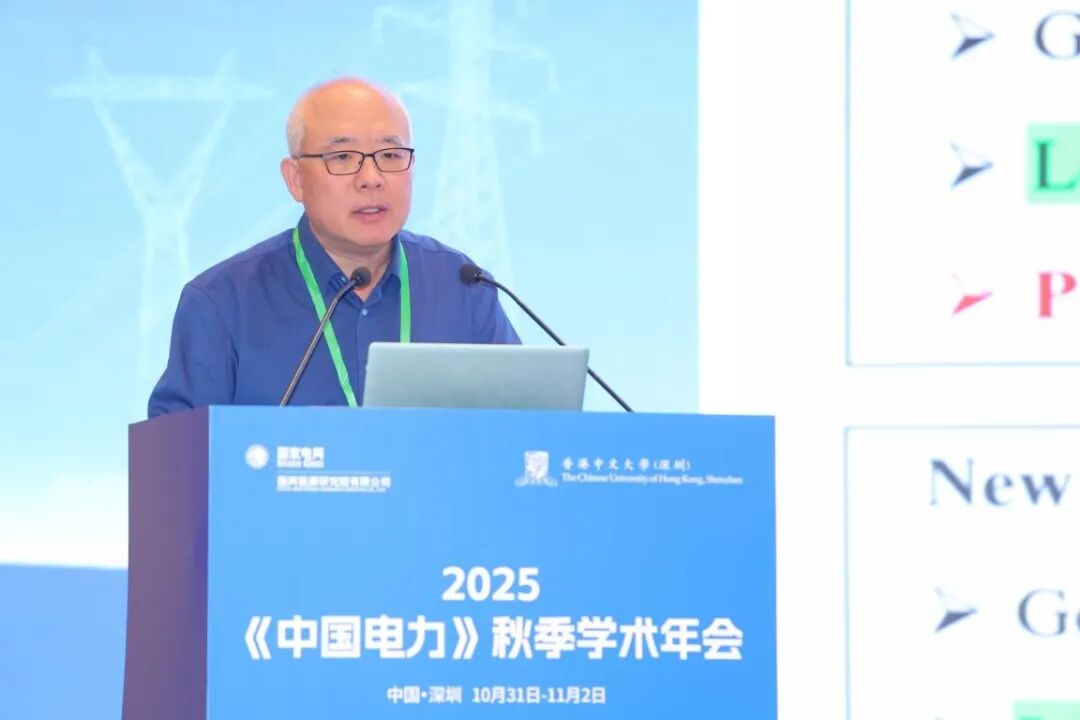
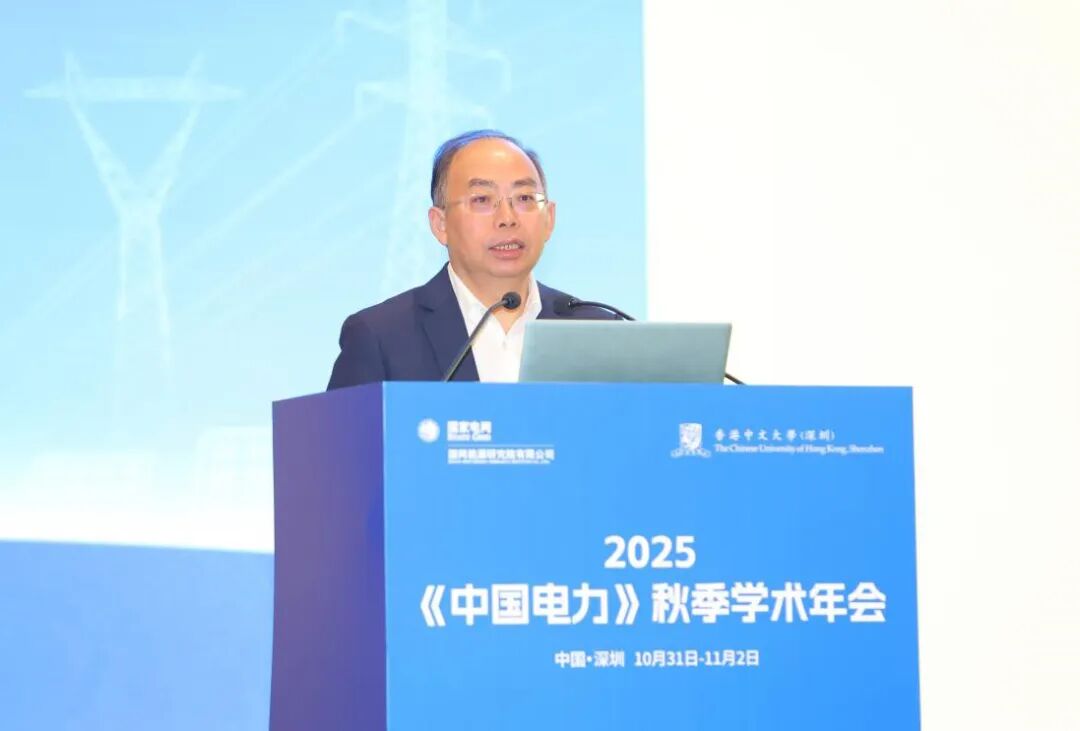
Address by Associate Vice-President Huang Jianwei of The Chinese University of Hong Kong, Shenzhen
Professor Huang Jianwei pointed out that artificial intelligence is a super engine leading the transformation of industries, and the new power system is the eras answer to the green and low-carbon transformation of energy. The Chinese University of Hong Kong (Shenzhen) is located in Shenzhen, the national innovation high of AI. With the mission of building "an outstanding research university rooted in China and facing the world", it has built an international and interdisciplinary faculty and research team. Gu by the school motto of "erudite and polite", it not only pursues the depth and breadth of knowledge but also pays attention to the temperature and demeanor of cooperation. This conference is not only a platform for reporting results and exchanging papers but also a bridge for exchanging ideas, expanding cooperation and gathering opportunities. We look forward to sparking wisdom sp and achieving practical results here.
Keynote report
Foreign Academician of the Russian Academy of Natural Sciences, Chief Scientist of the State Energy Group, Director of the National Key Laboratory of Low-bon Smart Coal-fired Power Generation and Ultra-Clean Emission, Deputy Editor-in-Chief of China Electric Power, Zhu Fawu; Director and Chair Professor the Department of Electrical Engineering at the City University of Hong Kong, Director of the Hong Kong Jockey Club Future Energy System Innovation Laboratory, IEEE Fellow Dong Chaoyang; Member of Strategic and Management Consulting Committee of China National Nuclear Corporation, Chief of the Strategic Planning Science and Technology, Former Director of the General Institute of Strategic Planning Research of China National Nuclear Corporation Bai Yunsheng; Professor of Zhejiang University, IEEE Fellow Wen Fushen; Professor of Changsha University of Science and Technology, Secretary-General of theunan Provincial Society of Engineering Thermophysics, Member of the Editorial Board of China Electric Power, Zhao Bin, made keynote reports respectively.
Zhu Fawu, Academician of the Russian Academy of Natural Sciences, Chief Scientist of the State Energy Group, and Associate Editor-in-Ch of "China Electric Power", reported on "Power Carbon Neutrality Path and Prospect".
Zhu Fajue pointed out that the realization of carbon neutrality in the power system is the core of the overall carbon neutrality in society, we must focus on the development of low-carbon power with wind power, photovoltaic power, hydropower and nuclear power as the main body. In terms of development, the hydropower resources in the United States, Britain and Japan are nearly saturated, and there is limited room for further expansion; countries with private land systems are also constrained high land costs and long negotiation cycles, which hinders the advancement of wind and solar projects. Looking back at China, the land system provides a favorable condition for the rapid layout of and solar power generation. On the specific path, China will adhere to diversified development, and it is expected that by 2060, nuclear power installed capacity will increase 0.6 billion kilowatts to 3.9 billion kilowatts, and small-scale nuclear power technology will help nuclear power extend to inland; hydrop installed capacity will be increased from 380 million kilowatts to 550 million kilowatts (excluding pumped storage), and the Yashe River is the focus of the current stage of development; It is expected that the storage capacity will be expanded from 130 million kilowatts to 1.89 billionowatts, and battery storage will become a key regulating means. In addition, China's coal-fired power generation accounts for 54.9% of global coal- power, and it is not feasible for coal-fired power to switch to gas-fired power due to the limitation of natural gas resources, so the focus is still on promoting the and efficient utilization of coal.
Professor Dong Zhaoyang, Chair Professor and Head of Department of Electrical Engineering, City University of Hong Kong, Director of the Hong Kong Jockey Club Energy Innovation Laboratory, IEEE Fellow, presented on "Renewable Energy Tracking Strategy for Plug-in Electric Vehicles via Quantized Aggregation of Heterogeneous Flexibility"
Dong Zhaoyang pointed out that the new power system is undergoing a structural transformation: under the traditional model, the generation side isable and the load side is passive, but with the large-scale access of new energy, the uncertainty of the generation side is increasing, and the load side can gradually become controll and active through effective management, eventually supporting the power grid to be cleaner and more stable. Against this backdrop, electric vehicles have become a key breakthrough. Their global sales have surpassed fuel, and with the help of two-way interactive technology, they can flexibly participate in the power grid support. However, due to different brands, battery specifications and usage methods, to efficiently aggregate massive electric vehicle resources has become a core challenge. He proposed that different types of electric vehicles can be integrated through clustering algorithms to improve dispatch efficiency; and using timeof-use electricity prices and differential pricing mechanisms, combined with parking fee strategies, to promote the coordination of electric vehicle charging and discharging behavior with new energy generation fluctuations. In the, it is also necessary to strengthen regional grouping management, formulate unified standard protocols, and continuously optimize system efficiency based on regional deployment characteristics, and further enhance new energy consumption capacity and power grid operation stability.
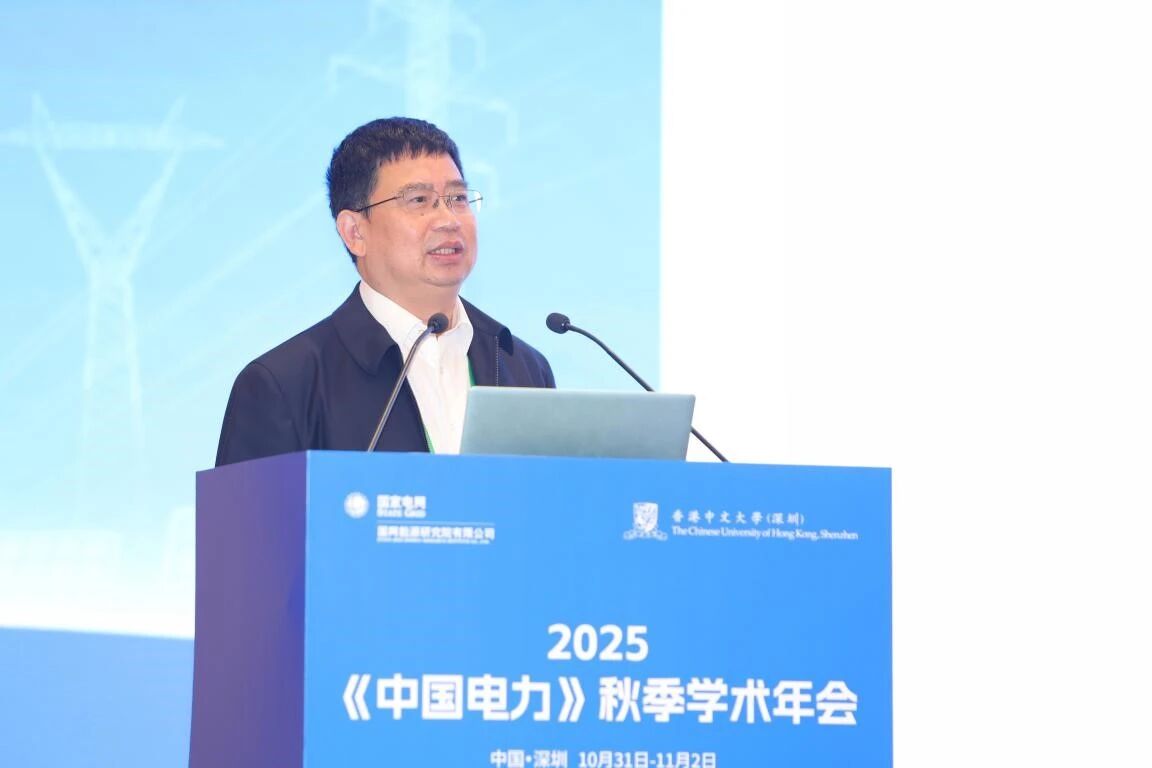
Member of the Strategic and Management Consulting Committee of China National Nuclear Corporation, Chief of the Strategic Planning and Technology Leading Group, and former President of the China National Nuclear Planning Research Institute, Bai Yunsheng, reported on the topic: "Reflections on the Development of Nuclear Energy in China under the Dual Carbon Goals"
Bai Yunsheng pointed out that nuclear energy, as a safe, low-carbon and scalable energy source, has been widely recognized for role in optimizing the energy structure, ensuring energy security, promoting emission reduction and promoting the sustainable and green development of the economy. China's nuclear energy development adheres to the-step strategy of "thermal reactor-fast reactor-fusion reactor". Thermal reactors, mainly large advanced pressurized water reactors, continue to promote industrialization and large- construction; fast reactors, with sodium-cooled fast reactors as the core, achieve closed nuclear fuel cycle and build a "thermal-fast" coordinated system; fusion reactors mainly follow magnetic confinement technology route, and are currently carrying out key technology research and engineering verification, striving to achieve engineering application as soon as possible. It is expected that by the "15 Five-Year Plan" period, the number of nuclear power units in operation and the total installed capacity in China will leap to the forefront of the world. On the development path,ai Yunsheng emphasized that thermal reactors are still the dominant industry in the current nuclear energy development, and third-generation pressurized water reactors will be the main reactor type for power construction before 2040 and also the main reactor type in operation this century; long-term safe supply of nuclear fuel is the core of the "three-step strategy, and the strategic deployment of fast reactors must be accelerated to support the large-scale sustainable development of nuclear energy; fusion research and development is still in the stage of technology and development, and strategic determination should be maintained, not blindly following the trend, and efforts should be made to promote technology accumulation.
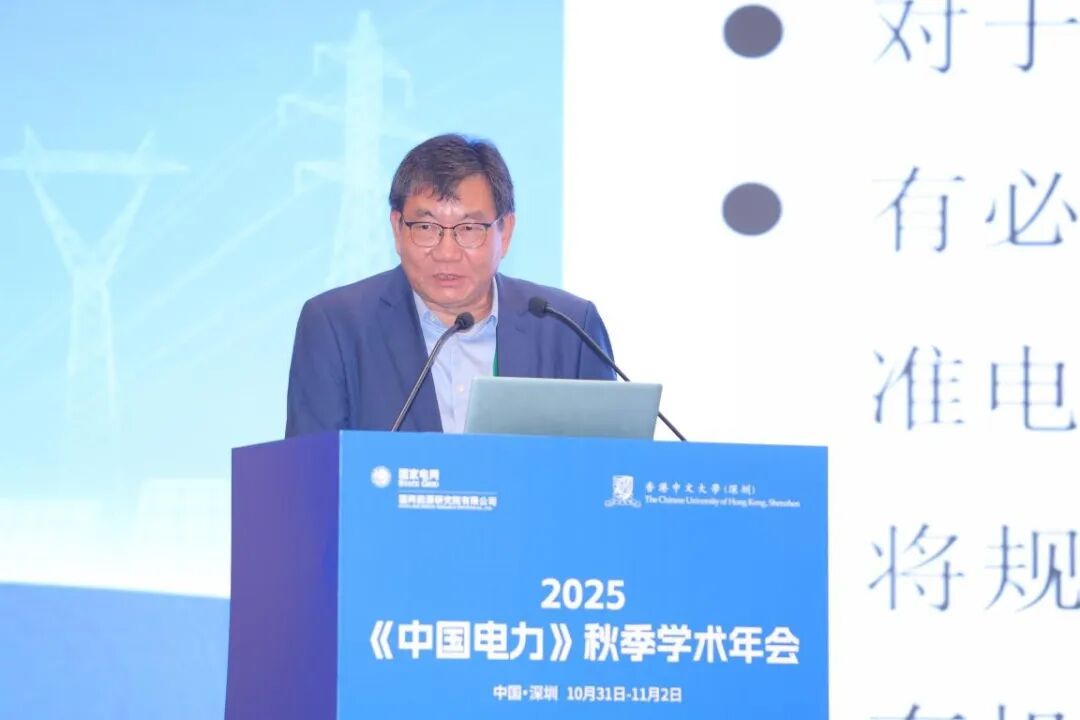
Professor Wen Fusuan, Fellow of IEEE from Zhejiang University, Report Topic: "Enhancing the Power Market Mechanism for Syneristic Development of Coal-fired Power and Large-scale New Energy Generation"
Wen Fusuan pointed out that the randomness and volatility of new energy have intensified the operation pressure of the power system and continued to up the supply cost. Against this backdrop, as the "anchor of power security", coal-fired power needs to accelerate its transformation into a power source that has both basic guarantee system regulation functions. Building a scientific and efficient power market mechanism is key to achieving this coordinated development. Wen Fusuan and his team proposed a capacity market mechanism that adapts the transformation of coal-fired power, adopting an architecture of "basic auction incremental auction" and introducing a capacity transfer right to ensure that the system has sufficient capacity margin. In to the new power system's higher demand for flexibility resources such as ramping and peak regulation, the mechanism can simultaneously guarantee the system's reliability and flexibility during peak load. In addition, the mechanism also coordinates the volatility characteristics of both the source and load sides, reasonably transferring the corresponding capacity costs to the new energy generation and load side, and fairly them according to the extent to which they cause system costs, thus promoting the power system to achieve safe and economic coordination in the green transformation through the synergy of policy, market and.
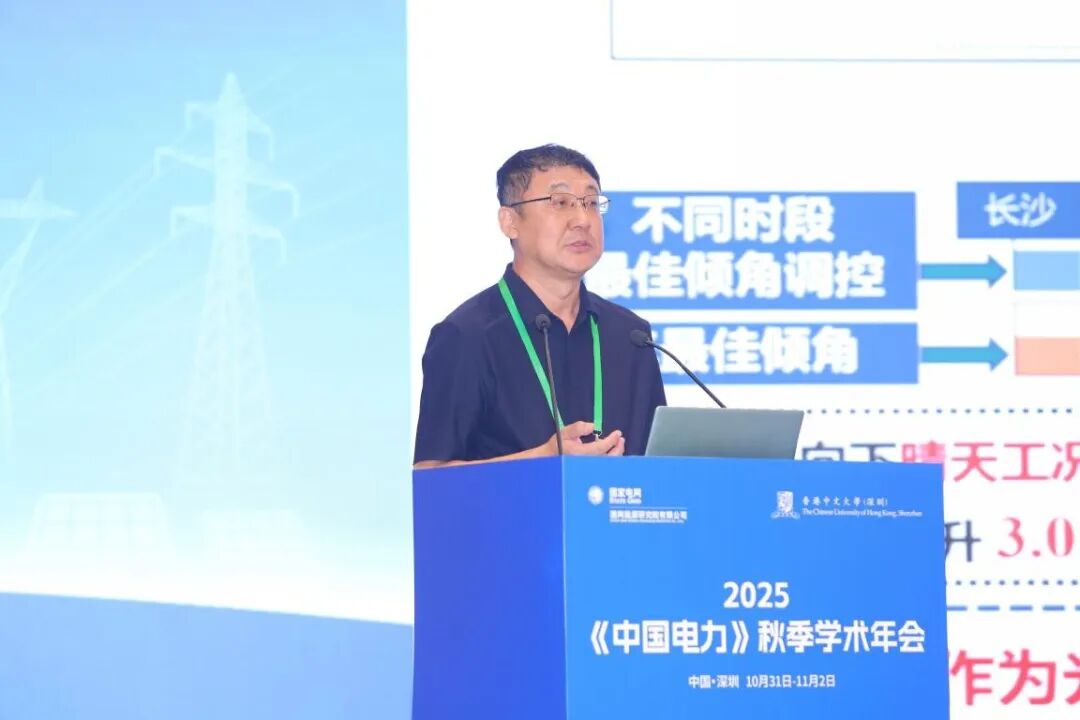
Professor Zhao Bin, Secretary-General of the Hunan Provincial Society of Engineering Thermophysics, and member of the editorial board ofChina Electric Power", reported on "China's Solution for County-level 'All Green Electricity': Jianhua Practice and the Path to Building a New Power System"
Zhao Bin pointed out that to achieve the "double carbon" goals, energy is the main battlefield, power is the main force, and new power system is the key carrier. Faced with the high degree of dependence on foreign energy in Hunan, insufficient grid regulation capacity and the difficulties in new energy consumption,ianhua Yao Autonomous County has explored a "full green electricity" development path for the county, providing an important demonstration for the construction of a new power system nationwide. On technical level, the local area innovatively applies machine learning prediction models to improve the accuracy of new energy power generation prediction, and integrates technologies such as photovoltaic and collaborative control, grid-forming wind power transformation and intelligent tilt angle adjustment, effectively enhancing the system's anti-volatility capability. On the system level, a three-level dispatching mechanism of "provinces-cities-counties" is constructed to achieve the "observable, measurable, controllable and adjustable" of distributed photovolic, and to coordinate multi-energy storage and microgrid technology, and to improve the flexibility of energy complementarity. The practice in Jianhua condenses the replicable core "technological maturity, management innovation, and policy matching", emphasizing the development of local conditions: gathering distributed resources in strong power grid areas, giving priority to the development of micros in weak power grid areas, and matching industrial and agricultural load with storage and supply-securing technologies respectively, providing a benchmark model for the green transformation of the whole countrys counties and cities.
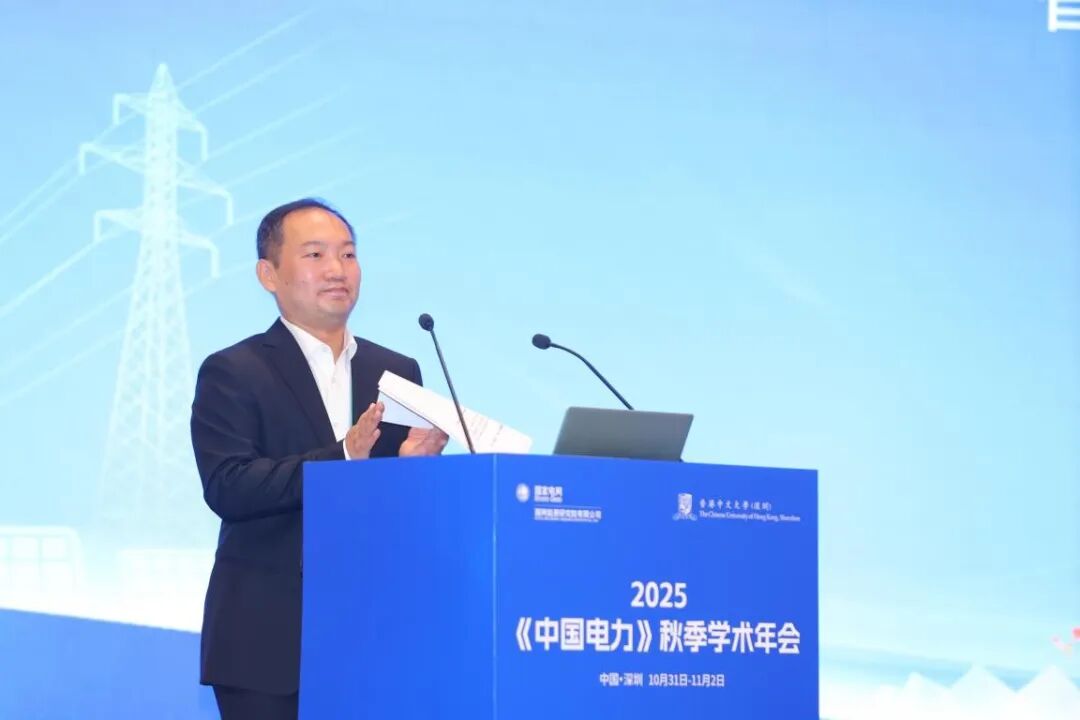
Deputy Editor-in-Chief of China Electric Power, Assistant to the Director of the Office (Hosting the Work) Presided over the Annual
The annual meeting was chaired by Zhang Hongxian, the deputy editor-in-chief and assistant to the president (in charge of work) of China Power.
Parallel Sub-Forum One: Low-carbon Resilient Integrated Energy System
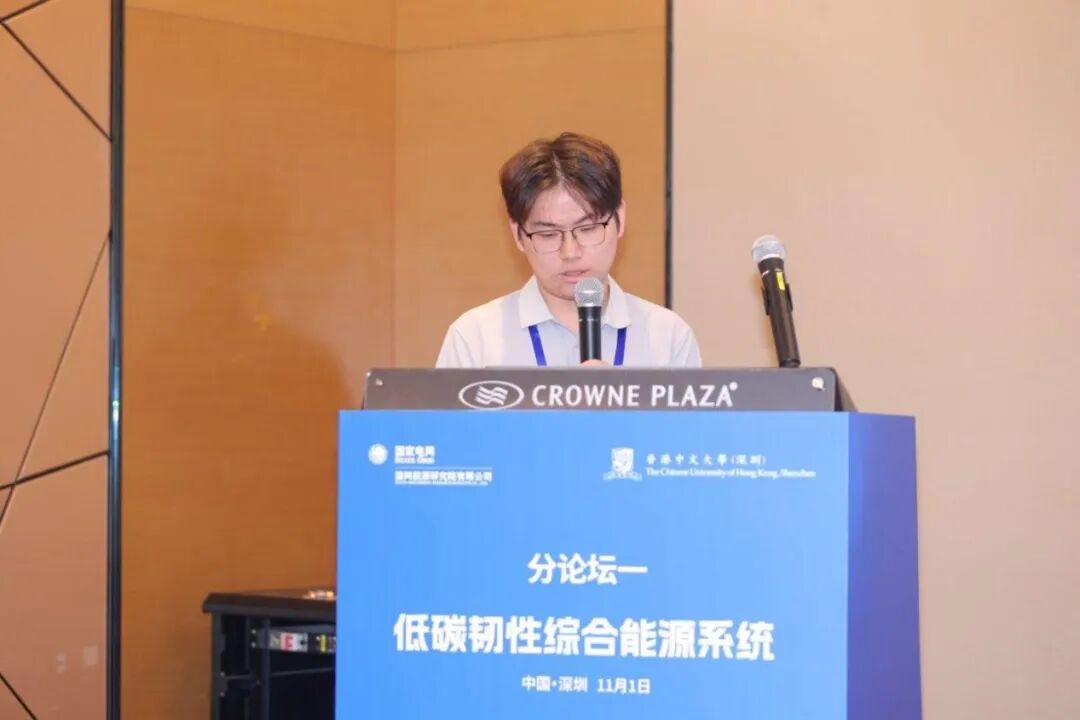
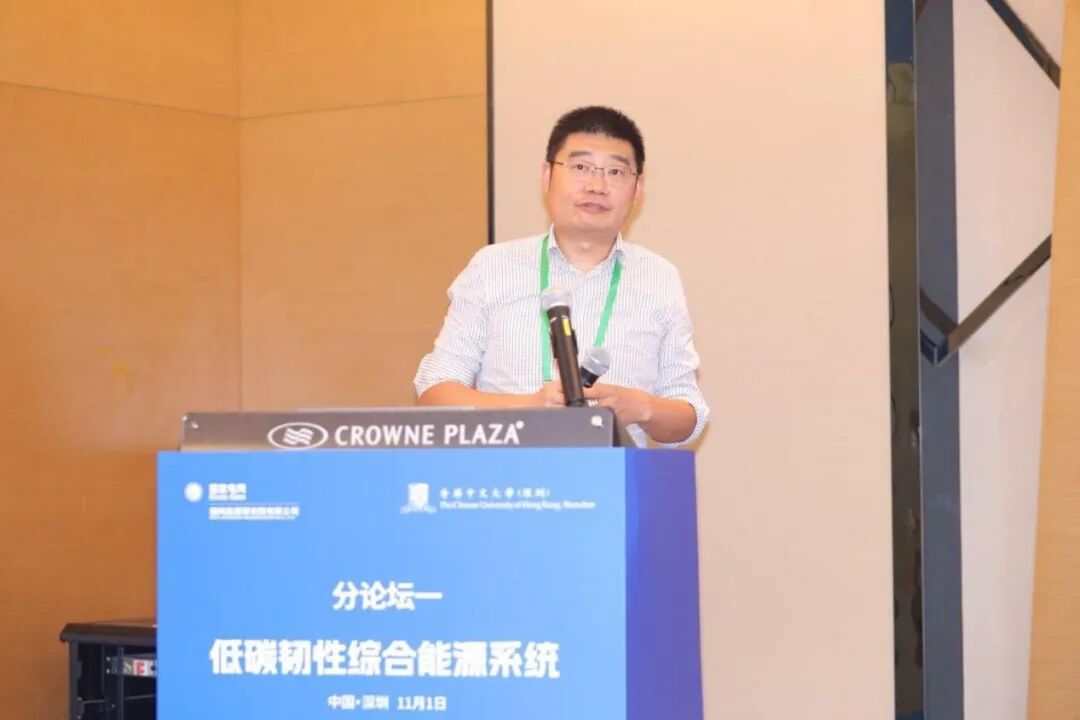
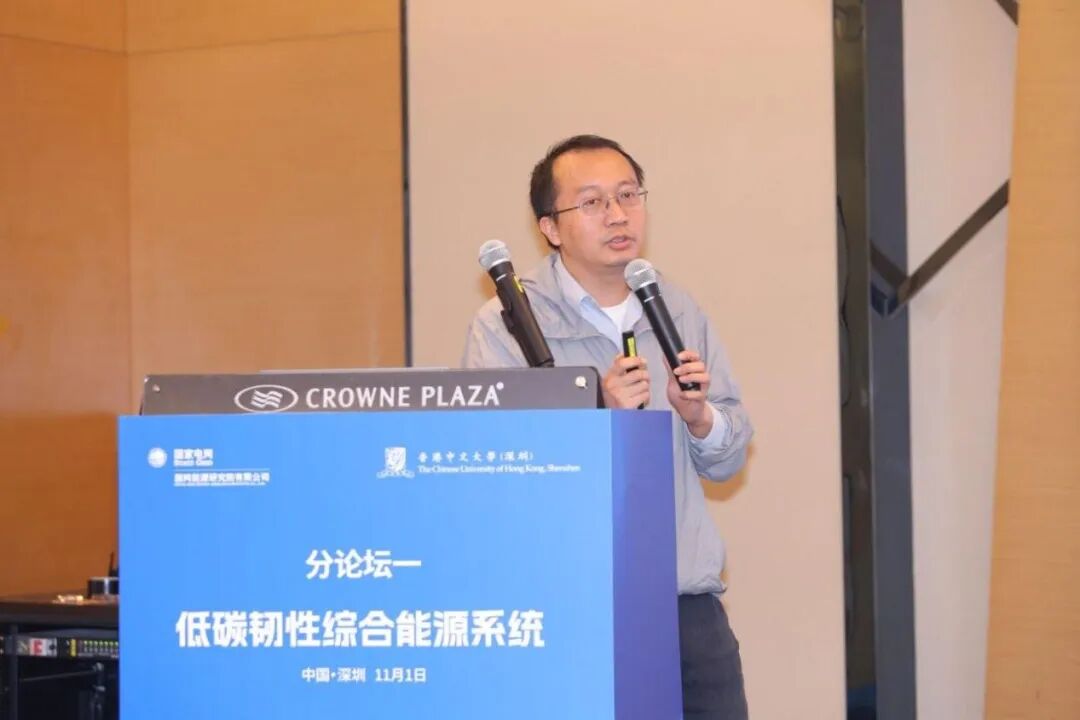
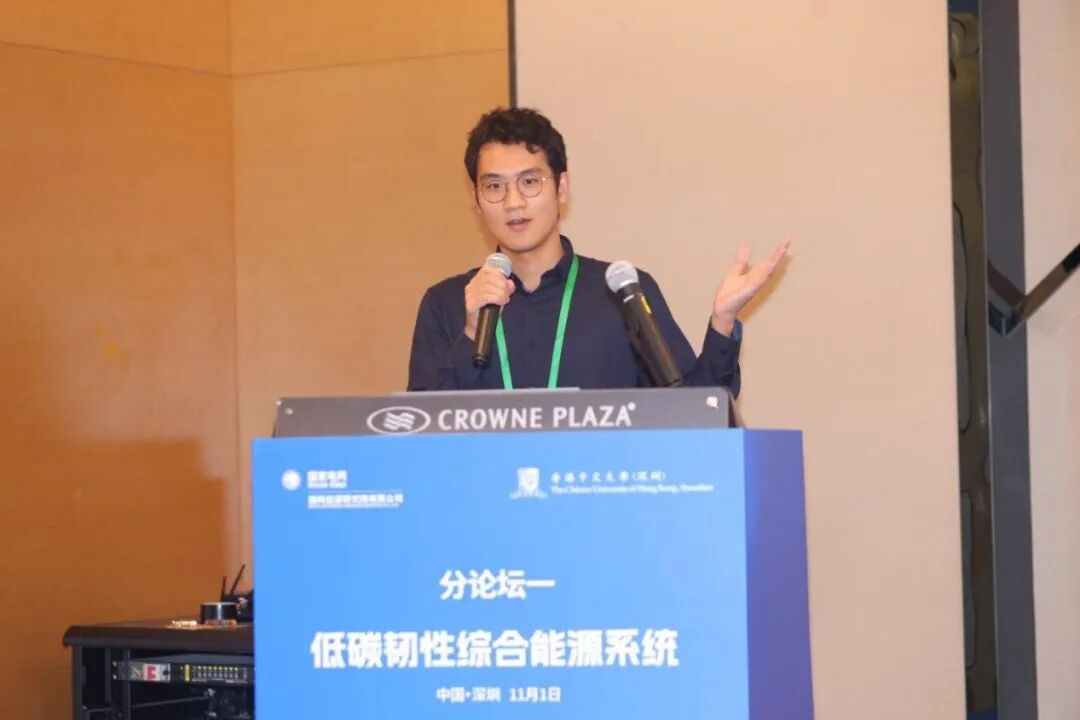
On the afternoon of November 1st, the parallel sub-forum one focused on the discussion of "Low-carbon Resilient Energy System", with Dr. Lei Shunbo from The Chinese University of Hong Kong (Shenzhen) as the convener. Experts and scholars such as Associate Zheng Jiehuan from South China University of Technology, Associate Professor Liang Liang from Harbin Institute of Technology (Shenzhen), Professor Ai Xiaeng from Huazhong University of Science and Technology, and Research Fellow Yao Lingxiang from the University of Macau made keynote speeches respectively. Dr. Lei Shbo, with the theme of "Synergistic Scheduling of Distribution Networks Resilience with Renewable Energy and Multi-type Storage", proposed the key issues of coordination—prediction of wind and solar power, mining distributed resources, synergistic strategy, AI and optimization methods. Associate Professor Zheng Jiehuan, with the theme "Energy Flow Calculation and Probability Analysis of Integrated Energy System", introduced his mathematical model and methodology in detail. Associate Professor Liang Liang, with the theme of " Distribution Network Topology Extraction and Support Method Considering Critical Load Demand", pointed out that power spring technology can provide low initial construction cost and flexible regulation capability for the distribution network Professor Ai Xiaomeng, with the theme of "Uncertain Environment Optimization Scheduling of Electric Power System Energy Storage", systematically introduced the energy storage planning and market mode, and pointed out that the standby battery dispatch of the cellular network can inject operational flexibility into the new power system in multi-time scale balance. Research Fellow Yao Lxiang, with the theme of "Multi-path Supply and Demand Evolution Driven Hydrogen Energy Storage and Transportation System Planning", elaborated on the characteristics of China's demand and supply.
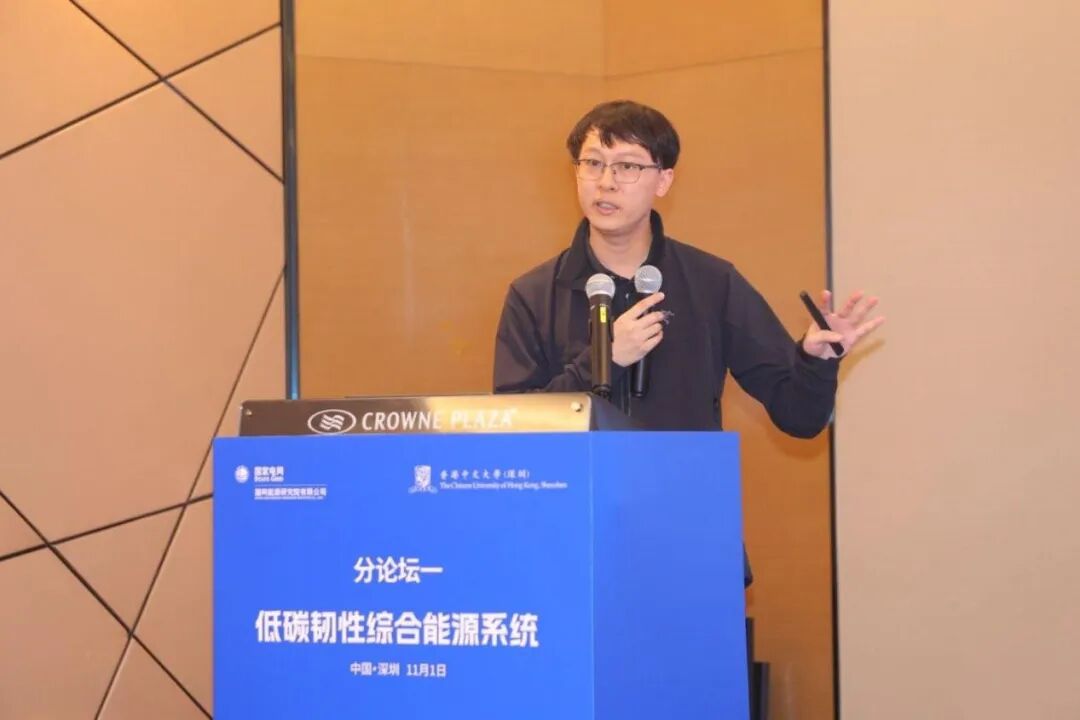
Assistant Professor Lei Shunbo from The Chinese University of Hong Kong, Shenzhen, made a special report.
Professor Zheng Jiehui from South China University of Technology made a special report
Professor Liang Liang from Harbin Institute of Technology (Shenzhen) gave a special report.
Professor Ai Xiaomeng of Huazhong University of Science and Technology delivered a special report
Researcher Yao Lingxiang of the University of Macau delivered a special report
Parallel Sub-forum 2: Advanced Technologies for Analysis and Calculation of New Power Systems
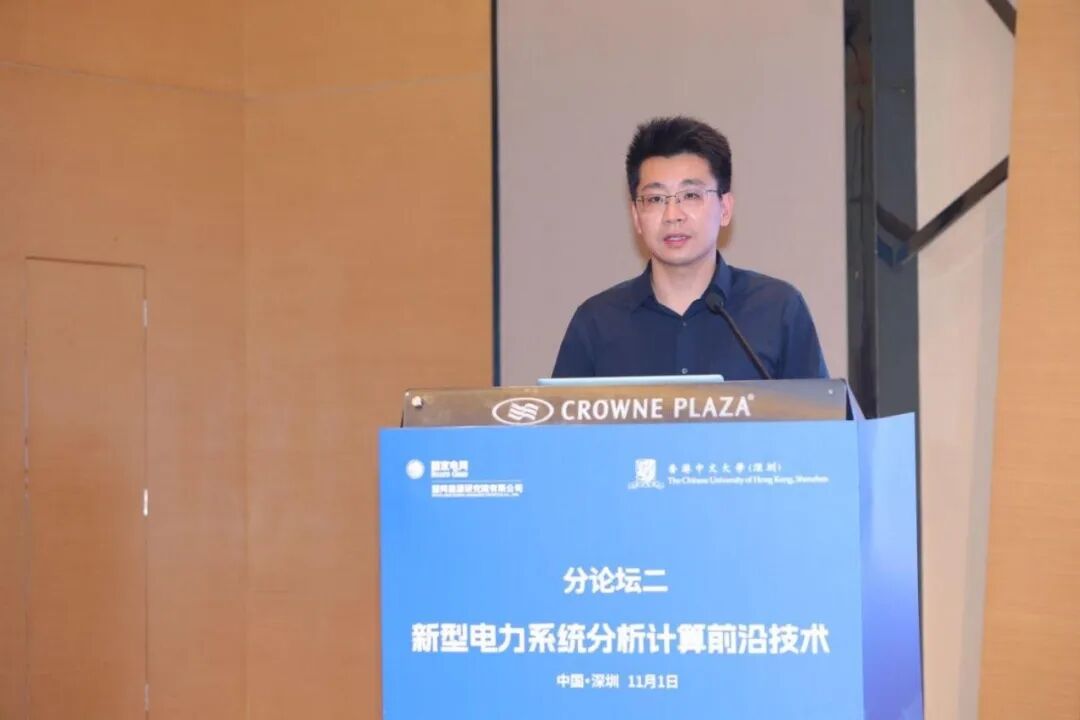
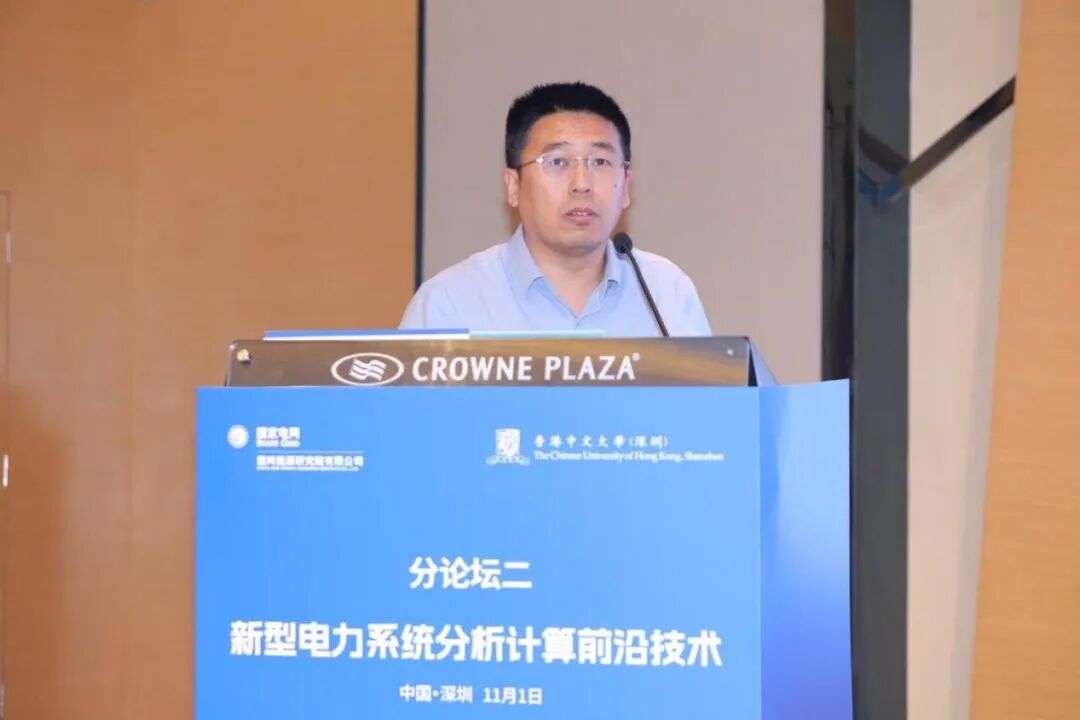
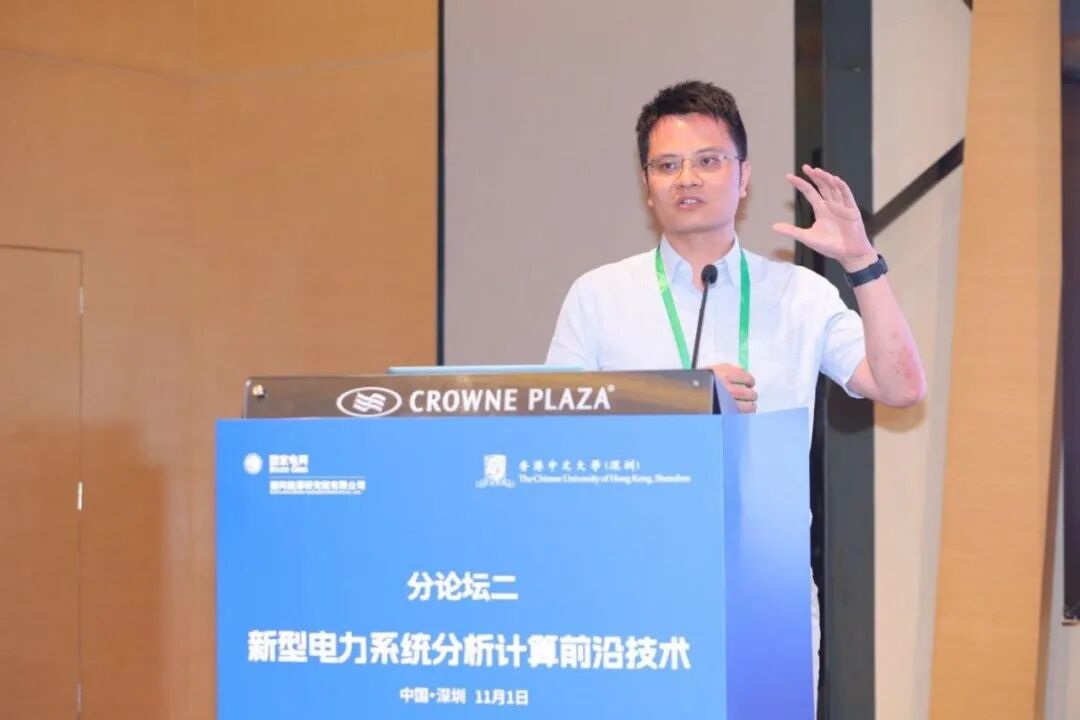
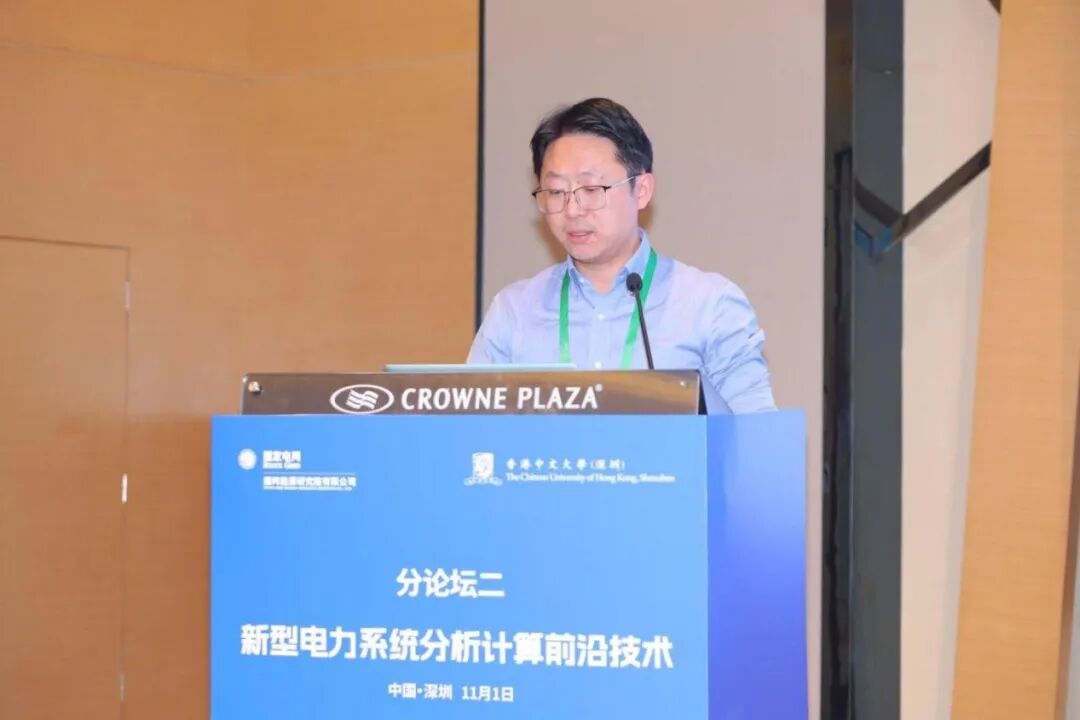
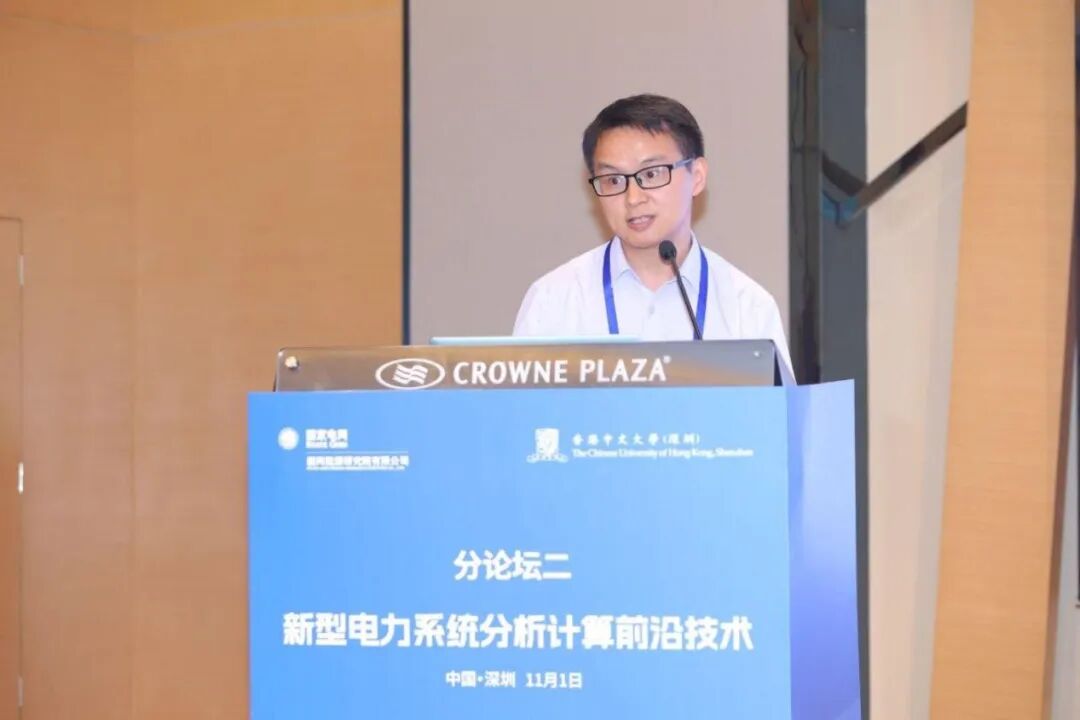
Session II focused on “Advanced Computing Technologies for New Power System Analysis”. The召集人为Beijing University of Technology’ Prof. Ju Yuntao. Themes presentations were made by Director Liu Jun of the Energy Strategy and Planning Research Institute of State Grid Energy Research Institute, Associate Prof. Xuuanbo from North China Electric Power University, Prof. Ju Yuntao from Beijing University of Technology, Assistant Prof. Li Zhigang from The Chinese University of Hong, Shenzhen, Associate Prof. Shen Xinwei from Tsinghua University - Shenzhen International Graduate School, and Chief Technical Expert Wu Shuangxi from China Power Grid Co., Ltd. Liu Jun presented “Key Issues and Analysis of New Power System Construction”, proposing the need to guide the high-quality development of new energy during “15th Five-Year Plan” period by coordinating the installed capacity, structure, layout and development model. Xu Chuanbo presented “Deep Reinforcement Learning Enables Planning and Operation of Offshore Wind Power to Hydrogen System”, systematically summarizing and analyzing the significance, technical form, operation optimization mode and economy of the offshore wind power to system. Ju Yuntao presented “New Power System Simulation Platform Based on Modelica”, designing and developing optimization algorithms for linear, nonlinear and mixed-integer programming models for power, and combining a variety of heuristic principles to achieve efficient solutions to power system optimization problems. Li Zhigang presented “Storage Resource Self-Dispatch Decision Based on Analytical Optimization”, proposing a method for analytical solution of storage optimal self-dispatch problems based on dynamic programming of parameters, where the storage optimal self-dispatch problem is reconstructed and decomposed a parameter planning sub-problem with parameter variables, which is analytically solved by a backward-forward recursive solution framework. Shen Xinwei presented “Offshore Wind Power to Green Manol System and Related Optimization Methods”, expounding on the development of offshore wind power and the method of wind power to hydrogen, carrying out a potential analysis of the production of greenanol in EU ports, and predicting the cost of traditional maritime fuel, focusing on the discussion of the micro-siting of wind turbines, the planning of power collection systems, the optimization planning methods of the wind-hydrogen system. Wu Shuangxi presented “The Essential Inducement of the Great Blackout in Spain and Portugal”, using blackout in Spain and Portugal as a case study to draw three insights: to consolidate the foundation of system strength, to strengthen the cross-regional electrical connection, and to a disturbance defense network.
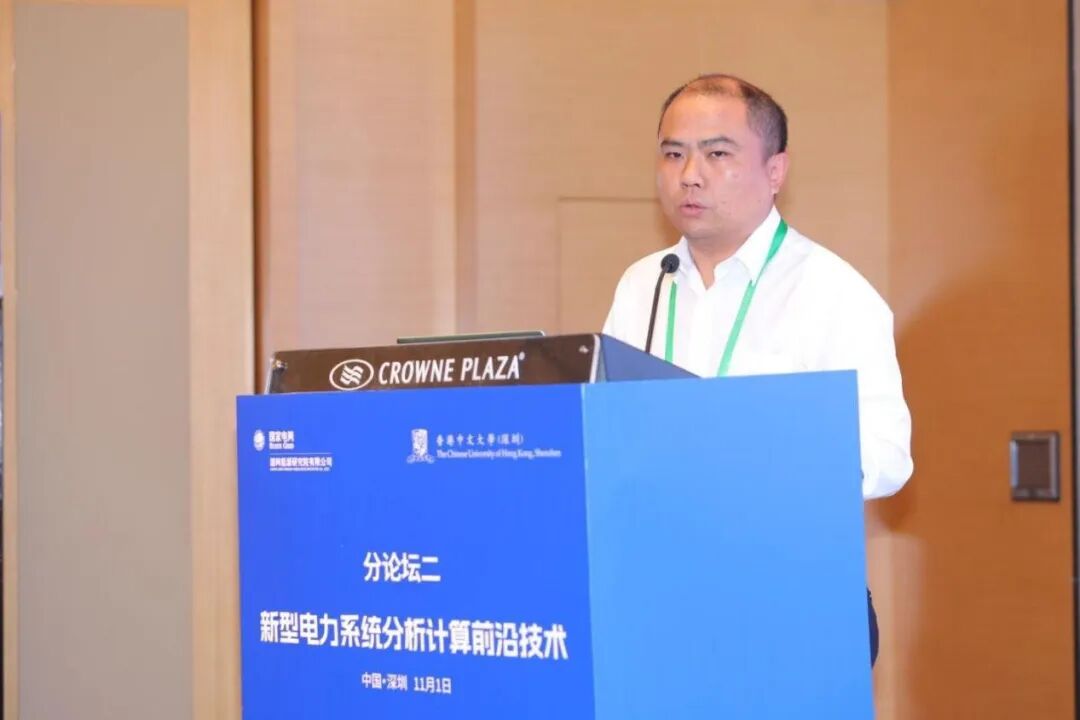
Liu Jun, director of the Institute of Energy Strategy and Planning at the State Grid Energy Institute, delivered a special report
Professor Xu Chuanbo from North China Electric Power University gives a special report
Professor Juyun Tao of Beijing University of Technology gave a special report
Assistant Professor Zhigang Li from The Chinese University of Hong Kong, Shenzhen, gave a special report
Associate Professor Shen Xinwei of Tsinghua University Shenzhen International Graduate School made a special report
Guangdong Power Grid Company's leading technical expert Wu Shuangxi delivered a special report
Parallel Sub-Forum Three: Optimization Operation and Stability Control of New Power System
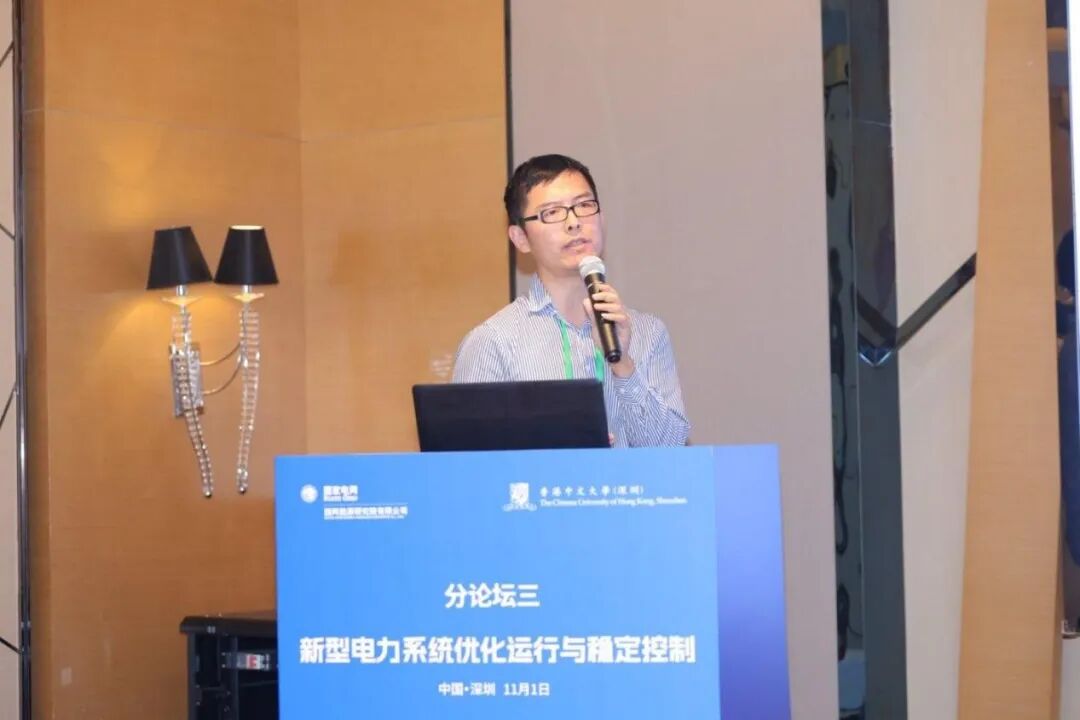
Parallel Sub-Forum 3 focused on "Optimized Operation and Stability Control of New Power Systems" with the convener being Senior Engineer Ren Biheng from State Grid Jiangsu Electric Power Research Institute. Experts and scholars such as Lecturer Li Chenyang from the School of Electrical New Energy Engineering at China Three Gorges University, Senior Technical Expert Fu Deyi from China Electric Power Research Institute Co., Ltd., Associate Professor Chen Chunyu from University of Mining and Technology, Researcher Li Yan from Southern Power Grid Energy Development Research Institute Co., Ltd., Senior Engineer Yan Yingfei from State Grid Southwest Power Research Institute, and Senior Engineer Ren Biheng from State Grid Jiangsu Electric Power Company Electric Power Research Institute, etc., made thematic speeches respectively. Li Chen, with the theme of "Analysis of Dynamic Characteristics and Multi-scale Electromechanical/Electromagnetic Modeling Technology of New Energy Units Connected to the Grid", started the dynamic characteristics of new energy units connected to the grid, and proposed new energy electromechanical parameter identification methods and electromagnetic structured model construction methods. Fu Deyi, with the theme "Grid Fault Process Wind Turbine Generator Group Electromechanical Coupling Action Mechanism and Coordinated Control", conducted research and discussions from the active support process of wind generator group electromechanical coupling action and its influencing mechanism, electromechanical coordinated optimization control strategy, and control strategy characteristic test verification. Chen Chunyu, with the theme "Research on Frequency Regulation-related Issues under the Power Market Environment", studied the development history and challenges of the market-oriented development of power grid frequency regulation, and proposed distributed power joint bidding method considering uncertainty, a frequency regulation market clearing method considering uncertainties of green power merchants, a frequency regulation market safe clearing method considering attack-defense game, and a regulation market safe settlement method considering network attacks. Li Yan, with the theme of "Demonstration Construction and Prospect of New Power Systems", conducted in-depth research on the planning, demonstration achievements, and future technological directions of new power systems in the Southern Power Grid. Yan Yingfei, with the theme of "Analysis and Optimal Control Research of the Interconnection Characteristics of Pulsating Water Turbine Units", started from the actual problems faced by the Southwest Power Grid, analyzed the interconnection characteristics ofating water turbine units and proposed the optimization of load adjustment strategy for pulsating units. Ren Biheng, with the theme of "Systematized Countermeasure Technology and Engineering for Grid Oscillation Risk in New Energy Centralized and Connected Areas", proposed the challenges faced by existing technologies based on the actual scenario of offshore wind and solar power, based on this, he studied innovative practices such as new energy electromagnetic modeling, wideband oscillation risk diagnosis, wideband oscillation monitoring and traceability, wideband oscillation active suppression, andband oscillation optimization and governance.
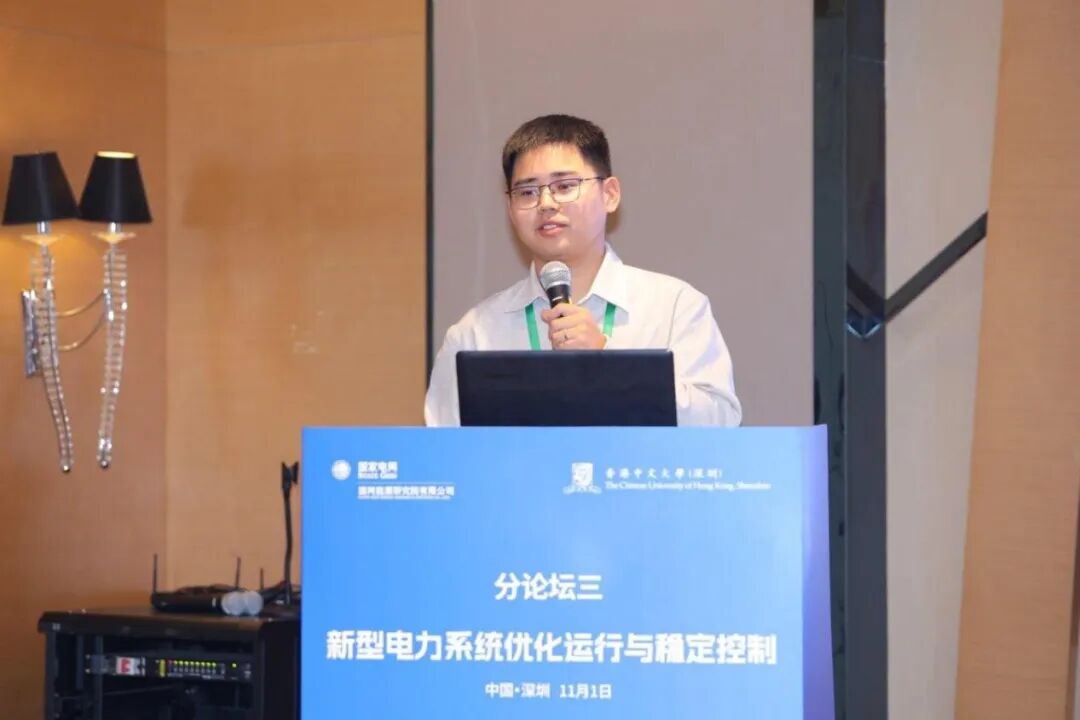
Lecturer Li Chenyang from the School of Electrical and New Energy Engineering at the Three Gorges University delivered a special report
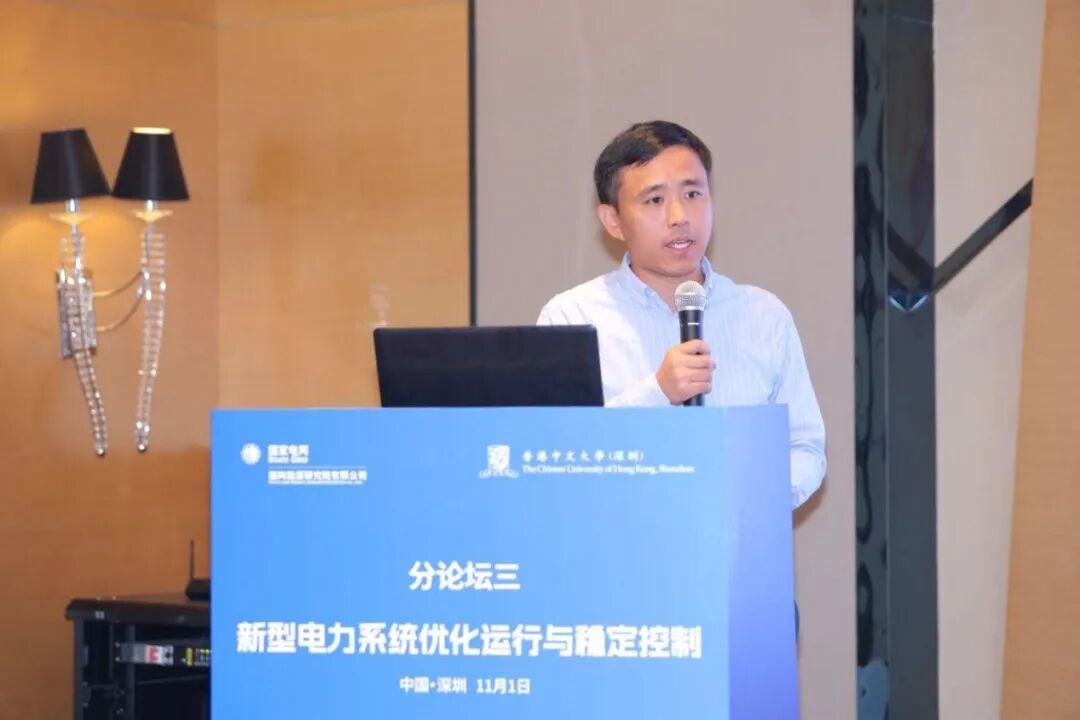
Senior technical expert Fu Desi from China Electric Power Research Institute Co., Ltd. made a special report
Professor Chen Chunyu from China University of Mining and Technology made a special report
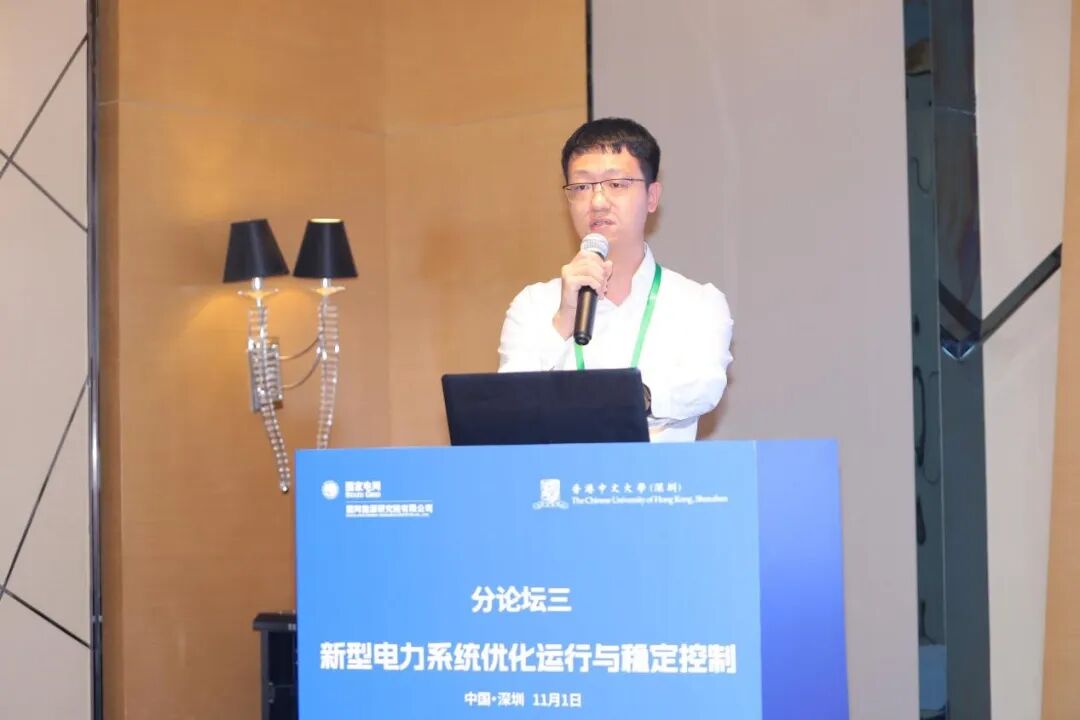
Li Yan, a researcher at the Southern Power Grid Energy Development Research Institute Co., Ltd., made a special report
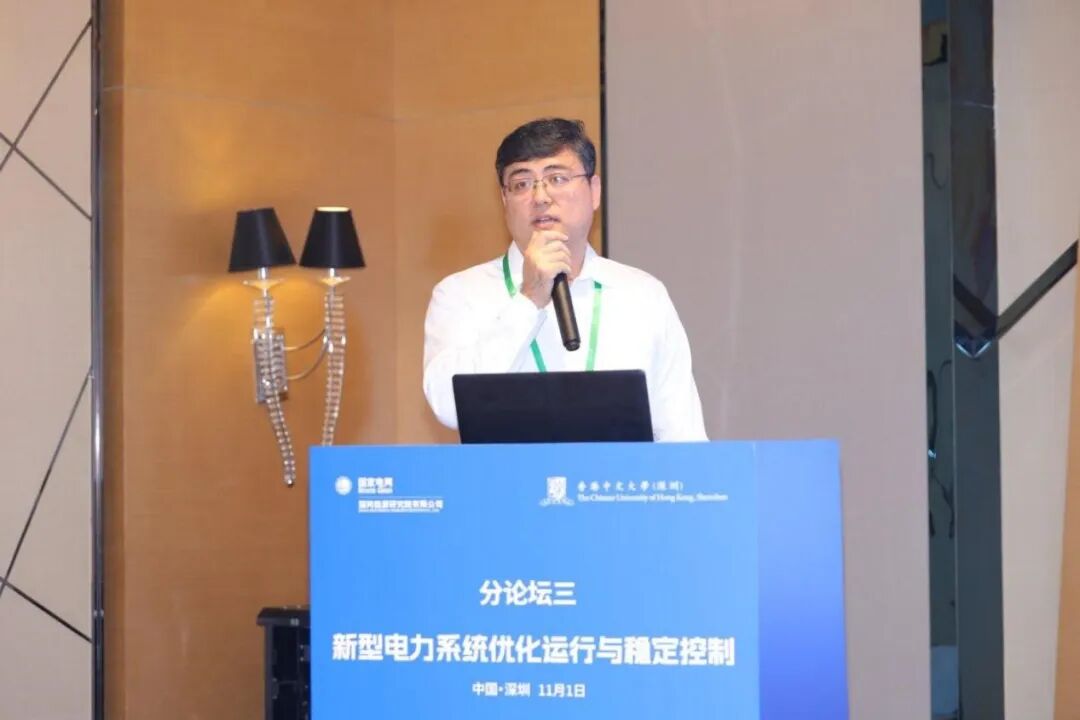
Special report by Senior Engineer Yan Yingfei from State Grid Southwest Electric Research Institute
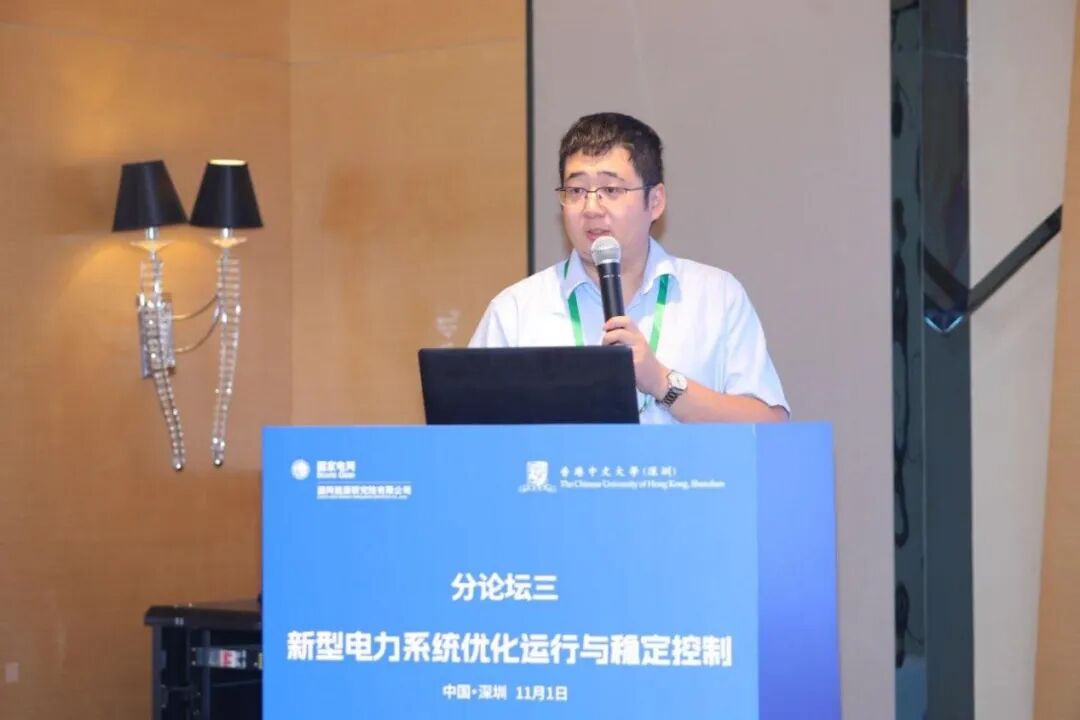
国网江苏省电力有限公司电力科学研究院任必兴高级工程师作专题报告
Recognize excellent papers/publish a call for papers
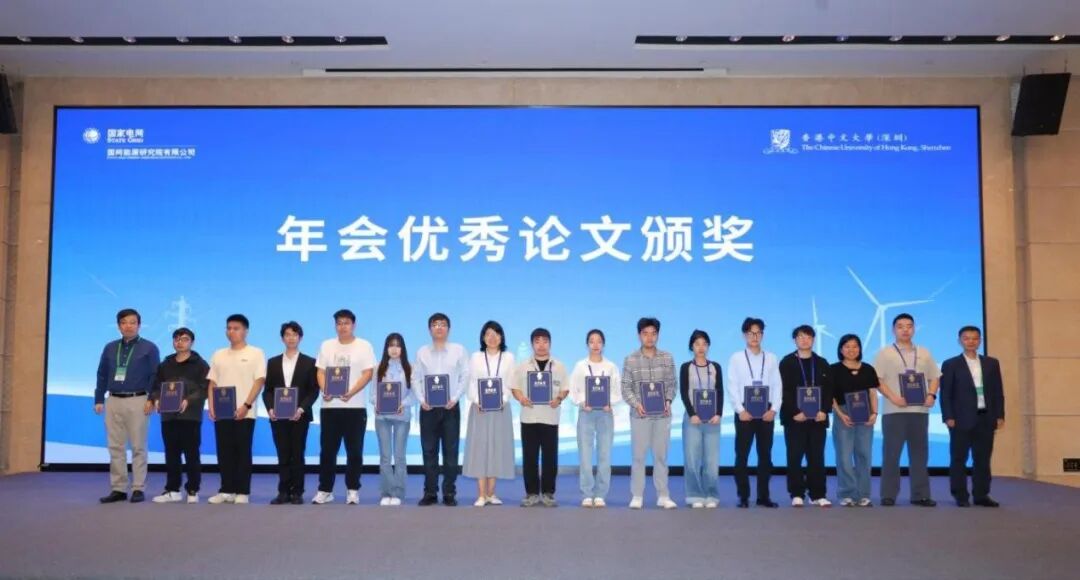
The conference conducted an excellent paper selection, and after the paper authors' on-site speeches and defense, as well as the comments and scoring by the industry expert, 15 papers were finally awarded as excellent papers at the Autumn Academic Annual Meeting of China Electric Power. Bian Baoguo and Huang Jianwei presented the awards to the winning representatives.
The awarding ceremony of excellent papers of the autumn academic annual meeting of China Electric Power
The conference also released the Call for Papers on "Key Technologies for the Development of Nuclear Power towards Carbon Neutrality", "Key Technologies for the Development Hydropower and Multi-energy Complementary in Southwest China", and "Construction, Simulation, and Optimization Decision-making of Digital-Driven Electric-HydrogenCarbon Coordination System".
On November 2nd, the 5th IEEE International Academic Conference on Energy Engineering and Power Systems (IEEE-EEPS 2025, which was divided into plenary reports, thematic sub-sessions, invited reports, and oral reports, also included a selection process for outstanding papers, outstanding student papers, oral reports, and outstanding posters, with awards presented on-site. The plenary report session invited six authoritative scholars, including Academician Xue Yusheng, Professor Z Zhiyong, Professor Liu Yutian, Professor Zhang Yingjun, Professor Sri Niwas Singh, and Professor Marc Rosen, who shared cutting-edge achievements from three directions: stability and security mechanisms of power systems, energy storage and low-carbon energy technology, and application of artificial intelligence and intelligent systems. This provided key theoretical support and practical paths the construction of a new power system.
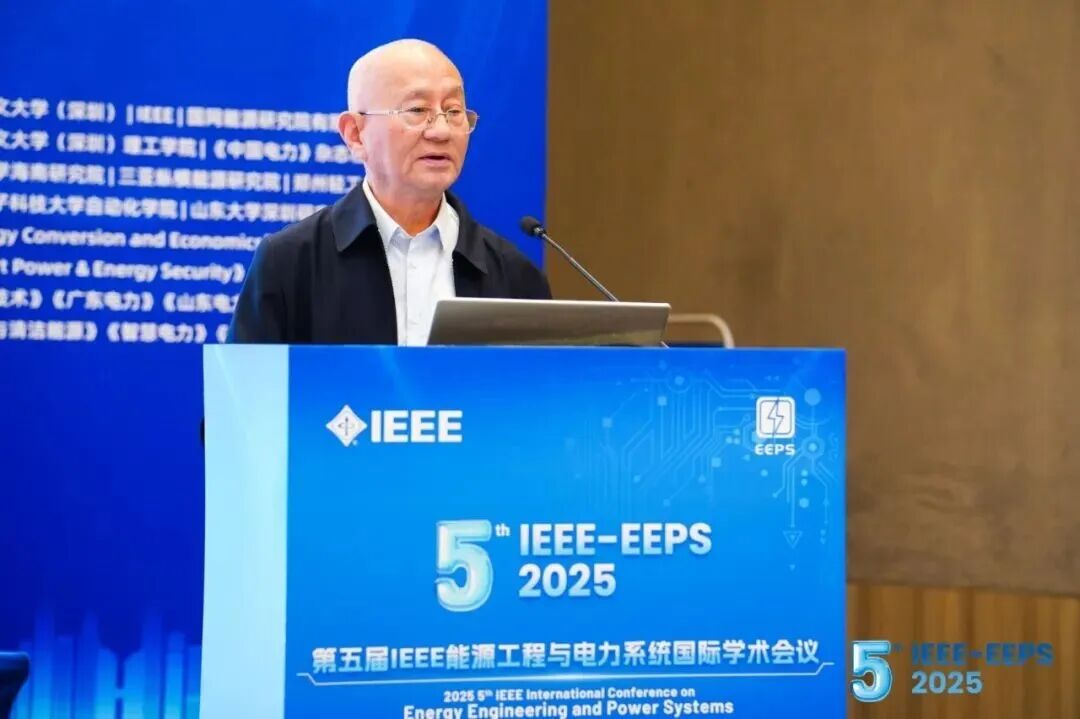
Professor Xue Yusheng, Academician of the Chinese Academy of Engineering, and Advisory Committee Member of the Editorial Board of "China Electric Power" Report Title: "Mechanism Analysis of Uncertain Complex Systems"
Professor Zhiyong Zhong, IEEE Fellow, Chair of IEEE PES, Hong Kong Polytechnic University, Presentation Topic: "Future Power Transformation: The Role of Vanadium Redox Flow Battery"
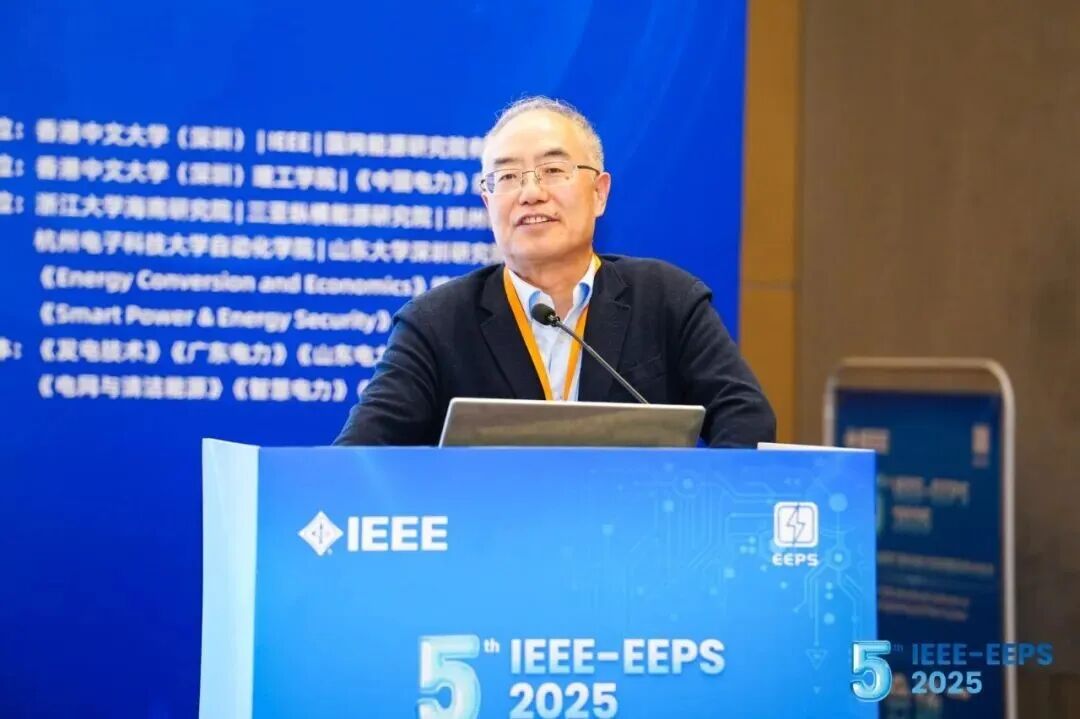
Professor Liu Yuetai of Shandong University, Report Title: "New Energy Base - Safety Risk Early Warning and Prevention and Control of UHVD Transmission System"
Professor Yingjun Zhang, IEEE Fellow, The Chinese University of Hong Kong, titled "Combining Generative Diffusion Models and Confidence Propagationgorithms"
分会场
The sub-sessions were equally splendid, with Session 1 focusing on the application of AI in power systems and markets. Scholars such as Professorhao Junhua and Professor Liang Gaoqi showcased the innovative applications of AI technology in load forecasting, carbon accounting, and system security. Session 2 revolved around the and operation of modern power systems, where experts like Associate Professor Wang Qin and Researcher Wang Guibin discussed hot topics such as data-driven optimization, hydrogen-electric, and system resilience. The conference, through its diverse forms of exchange including oral presentations and poster displays, fully reflected the vitality of academic and industrial integration, injecting new momentum the global energy transition.
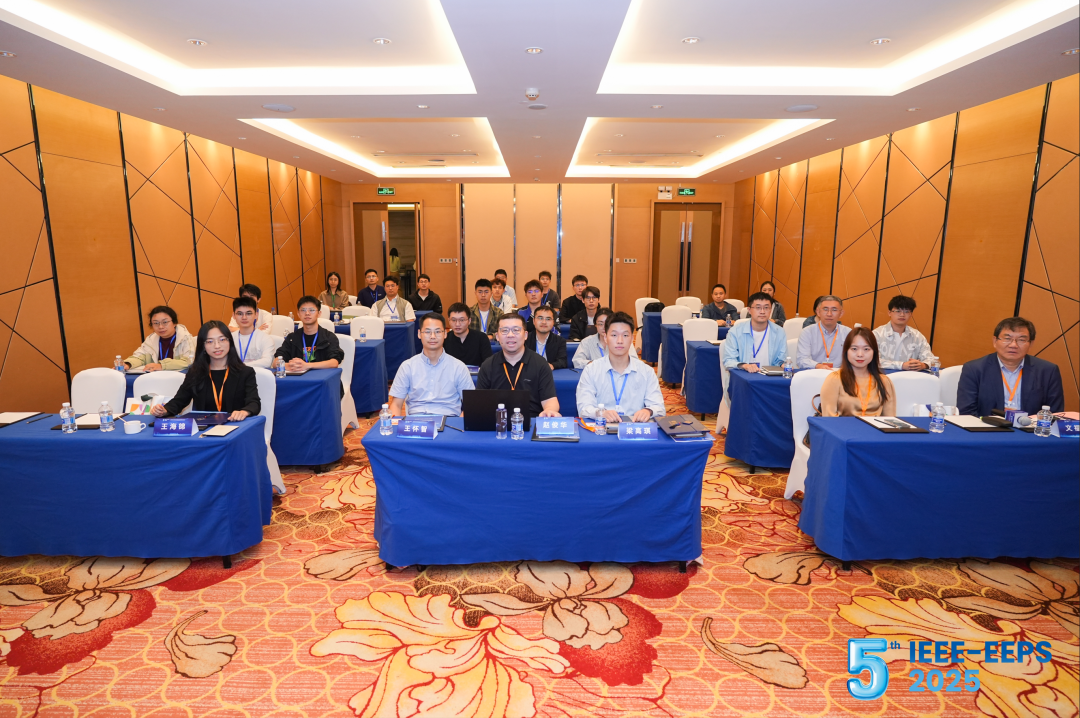
Session I: Applications of AI in Power Systems and Power Market
Session 2: Planning and Operation of Modern Power Systems
So far, the successful holding of this conference has significantly promoted international cooperation and technological innovation in the power industry, laying a solid foundation for future sustainable development, we look forward to more exciting content at the next conference!