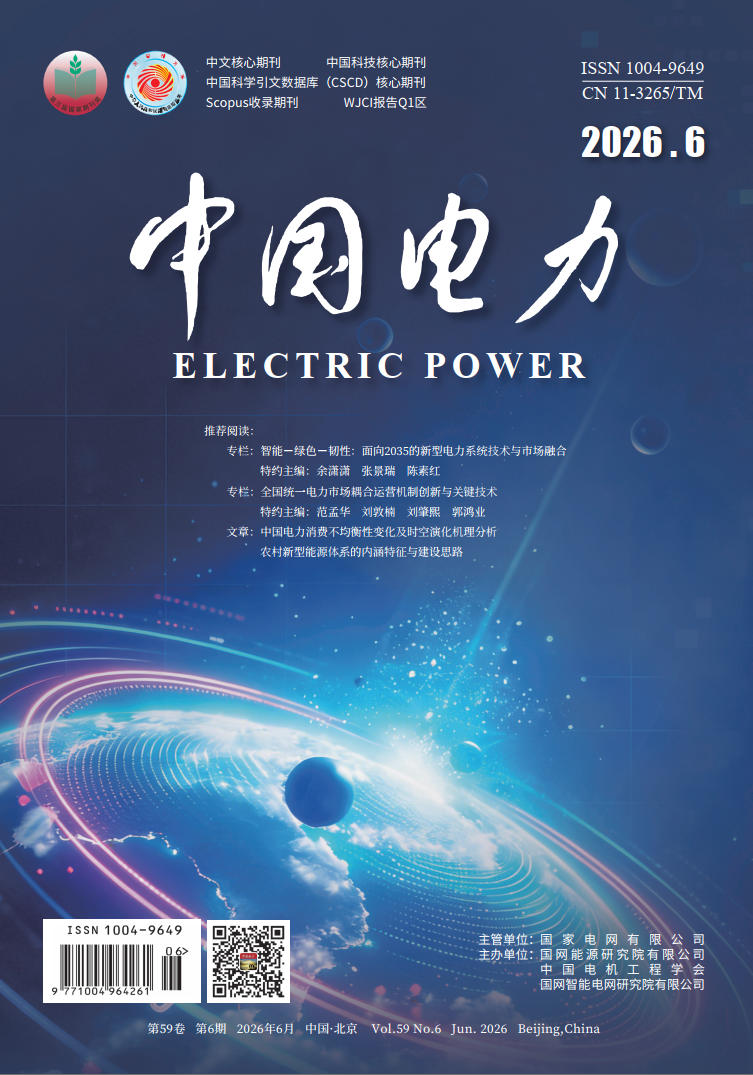
Against the backdrop of intensified global climate change and the large-scale rapid development of new energy, meteorological conditions become one of the key factors affecting the security of power grids and power supply. Transmission lines, distribution networks, and new energy power stations are prone to large-scale faults under weather conditions, which significantly increases the vulnerability of power grids and poses severe challenges to power supply and demand balance and system regulation capabilities.
Conventional power grid planning dispatch mainly focus on normal operation scenarios, lacking sufficient consideration for meteorologically driven uncertainties and multi-scale dynamic evolution. With the development of new technologies such as power-meteorological data, artificial intelligence prediction, distributed energy, and energy storage, it is imperative to explore systematic methods for power-meteorological sensing, vulnerability modeling, resilience assessment, operation optimization and market mechanisms to improve the power system's defense, adaptability, and recovery capabilities under extreme meteorological conditions.
Countries and regions such as the States and Europe have already explored issues such as meteorology-power fusion modeling, disaster scenario recovery, and market-based resilience incentive mechanisms. However, there are still problems such as adaptability to regional characteristics, insufficient utilization of flexibility resources, and lack of coupling between market rules and meteorological information. Domestically, on the one hand, power equipment is exponentially, and local power grids are becoming more complex. On the other hand, the "double-high" and "double-peak" characteristics of the new power system are highlighted and combined with meteorological factors, its meteorological dependency is even more prominent. How to establish a framework for enhancing the resilience of new power systems under the background of climate change has an important issue facing the power system.
To promote the sharing and academic exchange of the latest research results in this field, the editorial department of "China Electric" specially invited Professor Hou Hui from Wuhan University of Technology, Chief Engineer Wang Yang from the National Climate Center for Climate Services, Professor Li Gengfeng from Xian Jiaotong University, Professor Xu Yin from Beijing Jiaotong University, Professor Bu Sizi from Hong Kong Polytechnic University, Assistant Professor Lihengmao from Aalto University in Finland, and Associate Professor Hou Kai from Tianjin University to jointly serve as special editors, and organized the column of "Resience Enhancement Methods and Market Mechanism Design for New Power Systems under the Background of Climate Change". We cordially invite experts and scholars in related fields to actively contribute.
Topics of special call for papers (including but not limited to):
1. Modeling of power meteor big data and prediction methods for extreme meteorological events
2. Modeling of meteorological vulnerability of power transmission and distribution equipment and risk assessment of faults
3. Resil indicators and evaluation methods for new power systems
4. Planning and defense strategies for new power systems against extreme meteorological events
5. Methods for rapid recovery and dispatch optimization of new systems under disaster scenarios
6. Coordinated regulation of distributed energy, energy storage, and flexible load driven by power meteorology
7. Design of power market operation and auxiliary service based on power meteorology
8. Coupled modeling and case analysis of power meteorology-operation optimization-market mechanism
9. Practice and experience summary of power system response under extreme meteorological events at home and abroad
Publication plan for column papers
Deadline for submission: March 31, 2026
Public time: In the second half of 2026, it will be published in the form of columns
Special note: Papers in this column will enjoy the green channel of of "China Electric Power", be published online first after acceptance, and issue an acceptance notice as soon as possible.
Requirements for submission
Requirements for papers. The word count should be about 6000 words, using Word layout, and the format should refer to the "China Electric Power" paper template (the latest template can be downloaded from the official website of China Electric Power); an English translation of the title, author, institution, abstract, keywords, and references must be provided.
If it is a funded paper, please provide the project name and number. For papers funded by national-level projects, this journal does not charge page fees.
Submission method
Log in to the "China Electric Power" website: www.electricpower.com.cn, register for the author's username and password, submit online, select or indicate the column "Methods and Market Mechanism Design for Enhancing the Resilience of New Power Systems under the Background of Climate Change".
Contact person:
1. Editorial Department of "China Electric Power" Xu Xiaoyan
Phone: 010-66603809
Email: zg_xuxiaoyan@163.com
2. Guest Editor Wuhan University of Technology Hou Hui
Email: houhui@whutedu.cn
3. Guest Editor National Climate Center Wang Yang
Email: wangyang@cma.gov.cn
4. Guest Editor Xi'an Jiaong University Li Gengfeng
Email: gengfengli@xjtu.edu.cn
5. Guest Editor Beijing Jiaotong University Xu Y
Email: xuyin@bjtu.edu.cn
6. Guest Editor Hong Kong Polytechnic University Bu Siqi
Email: siqi.bu@.edu.hk
7. Guest Editor Aalto University, Finland Li Zhengmao
Email: zhengmao.li@aalto.fi
8. Guest Editor Tianjin University Hou Kai
Email: khou@tju.edu.cn
Introduction of the guest editor
Hou Hui, Professor,.D. Supervisor, Director of the Department of New Energy and Power in the School of Automation at Wuhan University of Technology. IEEE Senior Member, Senior Member of the Electric Power Society, Senior Member of the Chinese Society of Electrical Engineering. Main research directions include power system security risk assessment, energy Internet, etc. In recent years, he has the first prize of China Electric Power Science and Technology Innovation Award in 2019, the first prize of State Grid Corporation of China Science and Technology Progress in 202, and so on. He has presided over one sub-topic of the National Key Research and Development Program, one general project of the National Natural Science Foundation, one youth, etc. He has published more than a hundred papers in domestic and foreign core journals and important international conferences, has been authorized more than twenty inventions, and more than thirty softwares. He is a member of the editorial board of "PCMP (Protection and Control of Modern Power Systems)", a youth member of the editorial board of "China Electric", and so on. He was selected into the Elsevier Global Top 2% Top Scientists List in 2024, and the Top 1% list China's highly cited scholars in 2024.
Wang Yang, Ph.D., Senior Professional Engineer, China Meteorological Administration Youth Meteorological. Currently, he is the Director of Climate Service at the National Climate Center, Deputy Director of the Energy Meteorology Professional Committee of the China Meteorological Service Association, and member of the Wind Energy Professional Committee of the China Renewable Energy Society. His main research directions are wind and solar energy resource assessment and prediction. He has hosted the development of the new energy big data platform of the National Climate Center, presided over more than 20 scientific research and service projects at or above the provincial and ministerial levels, and published than 30 SCI papers in journals such as Renewable & Sustainable Energy Reviews. He has won 5 provincial and ministerial level awards including the first prize of Geographical Information Science and Technology Progress, the second prize of scientific and technological progress of the China Renewable Energy Society, and so on. He has authored more than 2 energy meteorological decision-making service materials, which have been adopted by the two offices, and has been employed as a youth member of the editorial board of "China Electric Power".

Li Gengfeng, a professor and doctoral supervisor at the School of Electrical Engineering of Xi'an Jiaotong, is a recipient of the National Outstanding Youth Fund. Currently, he serves as the director of the Shaanxi Provincial Key Laboratory of Intelligent Grid, a member the Standardization Technical Committee for Microgrid and Distributed Power Grid Access, and a member of the Distributed Generation and Smart Distribution Committee of the Chinese Society for Electrical Engineering. His research areas include the evaluation and improvement of power system elasticity, power system planning and reliability, comprehensive energy system analysis and optimization, and the application of artificial intelligence in power systems. has hosted six national scientific research projects, including the National Natural Science Foundation Integration Project and the Key Project of the National Science and Technology Major Special Program for Smart Grid in 230, and has received numerous scientific research awards, including the Second Prize of the National Natural Science, the China Youth Science and Technology Award, and the First Prize of the Shaxi Province Science and Technology Progress.
Xu Yin, a professor at Beijing Jiaotong University, a doctoral supervisor, the deputy director of the Personnel and the deputy director of the Party Committee Teacher Work Department, a young Yangtze River scholar of the Ministry of Education, and the chief scientist of the National Key Research and Development (Young Scientists Project). He has been engaged in the research of power system resilience for a long time, has won three provincial and ministerial-level science and technology awards, three awards from first-class societies. He has received honors such as the Hou Yingdong Education Foundation Higher Education Youth Science Award and the China Electric Power Excellent Youth Science and Technology Talent Award. Currently, he serves as an editor for domestic and foreign journals such as the IEEE Transactions on Power Systems and Electric Power Automation; he also serves as the of the Safety Technology Professional Committee of the Beijing Electrical Engineering Society, the chairman of the Power Grid Resilience Technical Subcommittee of the IEEE PES Smart Grid and New Technology CommitteeChina), and the chairman of the IEEE PCCC Membership Committee.
Professor Bu Sizi, Associate Professor of the Department of Electrical and Electronic Engineering at the Hong Kong Polytechnic University, Director of the Research Center for Modernization of Power Grid, Tenured Professor, Doctoral Supervisor, IET Fellow, IEEE Senior Member, currently serves as the Chairman of IET (Hong Kong) Power and Energy Section, and is a Chartered Engineer of the Institution of Engineering and Technology in the United Kingdom. He has been engaged in research the safe and stable operation and planning of new power systems for a long time, publishing more than 280 academic papers and two Springer Nature monographs. In recent years as the chief project manager or foreign project leader, he has hosted more than 10 cooperative research fund projects between Hong Kong, mainland China, and international partners, including the Innovation Kong R&D Platform Special Government Project Fund, the Hong Kong Research Grants Council Outstanding Young Scholars Scheme Fund, the Hong Kong Research Grants Council General Research Fund, the National Research and Development Program Key Special Projects, the National Natural Science Foundation, the Guangdong Natural Science Foundation, the India-Hong Kong International Joint Fund, and the Shanghai-ong Kong University Alliance Fund, etc. He has won the Golden Award at the Geneva International Invention Exhibition, 3 Gold Awards, 2 Silver Awards, and 2ze Awards from the British National Grid Company, and is among the top 2% of scientists in the world. He serves as an editorial board member of high-level journals such IEEE Transactions on Power Systems, IEEE Transactions on Consumer Electronics, IEEE Open Access Journal of Power and Energy, CSEE Journal of Power and Energy Systems, Journal of Modern Systems and Clean Energy, Protection and Control of Modern Power Systems, and Advances in Applied Energy, and concurrently as a review expert for the Vocational Training Board of Hong Kong Government, a consulting expert for the Chinese Electric Power Advisory Expert Group, a consulting expert for the British Distribution Network Transformation Strategy and Technology, a standing member of the IEEEES (China) Power System Protection and Control Technical Committee, and a chairman of several international conferences and technical advisory committees, etc.
Li Zhengmao, Ph.D., Assistant Professor (Tenure Track), Department of Electrical Engineering, Aalto, Finland. His main research interests include integrated energy systems, artificial intelligence and optimization, green hydrogen multi-energy coupling modeling and operation. He has chaired multiple research projects funded the EU, Finland, Singapore, etc. He has published 68 academic papers (40 journal papers, including 22 in JCR Q1 and 22 in first quartile of Chinese Academy of Sciences), has been authorized for 2 invention patents, and has published 2 SCI English monographs. He has been cited 496 times by Google Scholar and has an h-index of 35. His representative achievements have been published in top international journals such as IEEE Transactions on Smart Grid, Energy, IEEE Transactions on Power Systems, etc., of which 2 papers won the Best Paper Award of the journal, and his research results were reported by IEEE Innovationlight. Currently, he is an Associate Editor of IEEE Transactions on Sustainable Energy, IEEE Transactions on Industry Applications, IEEE Access, etc., a Youth Editor of IET Conversion and Economics, and a Guest Editor of Journal of Energy Storage, IET Renewable Power Generation, etc. He has won the Best Editor Award of IET Energy Con and Economics and the Outstanding Reviewer Award of MDPI Energies. He was invited to give invited reports at international conferences such as IEEE SmartGridComm, and to serve a session chair. He was selected as a "World's Top 2% Highly Cited Scientists (Energy Field)" for two consecutive years, was named in the "For China's Top 100 Most Influential Chinese Elites" in 2024, and was awarded the title of "Top Ten Chinese Science and Technology in Europe" in 2025.
Hou Kai, Associate Professor and Ph.D. supervisor at Tianjin University, has been engaged in research in the fields of resilience evaluation and assessment of power systems for a long time. He has published more than 30 SCI papers in the relevant fields of this project, and has been authorized for 34 invention patents. As the person in charge, he has undertaken longitudinal scientific research projects such as the National Natural Science Foundation, and has won 2 first prizes and 1 second prize provincial and ministerial-level science and technology progress, and has been selected into the Youth Talent Support Project of the Chinese Society for Electrical Engineering, and has won the Outstanding Youth Award of the IEEE PES China Technical Committee; He serves as the Deputy Director of the Tianjin Power Supply Society, the Associate Editor of IET GTD, and the Editorial Board of "Smart Power".